How to Notice What No Longer Belongs in Your Home
Have you ever walked through your home and suddenly noticed something that’s been sitting in the same spot for months…or even years? It wasn’t bothering you yesterday, but today you can’t believe you overlooked it for so long.
Learning how to know what to declutter isn’t always about finding obvious junk. Sometimes it’s about noticing the everyday items that have quietly outlived their purpose.
If you’re trying to simplify your home or just getting started with our Downsizing 101 guide, this simple shift in perspective can help you see your home with fresh eyes and make downsizing decisions with more confidence.
Quick Answer: How to Know What to Declutter
Most people think decluttering starts by looking for things to get rid of. I am in a different camp. I think it starts by learning to notice the things you’ve stopped seeing. The stuff you have passed over for so long it now blends into the background of your home.
How to know what to declutter starts with noticing. Once you see it, making decisions becomes much easier because you’re no longer looking at your home on autopilot.
Walk through your home with fresh eyes and ask yourself, “If I were setting up this space today, would I still choose to keep this?” That one question can help you spot the items that have quietly outlived their purpose and make decluttering decisions with greater confidence.
Another question that can help is whether the amount you’re keeping actually fits the space you have. Sometimes everything is useful on its own, but together it’s simply too much for your space.
I Didn’t Even See Them Anymore
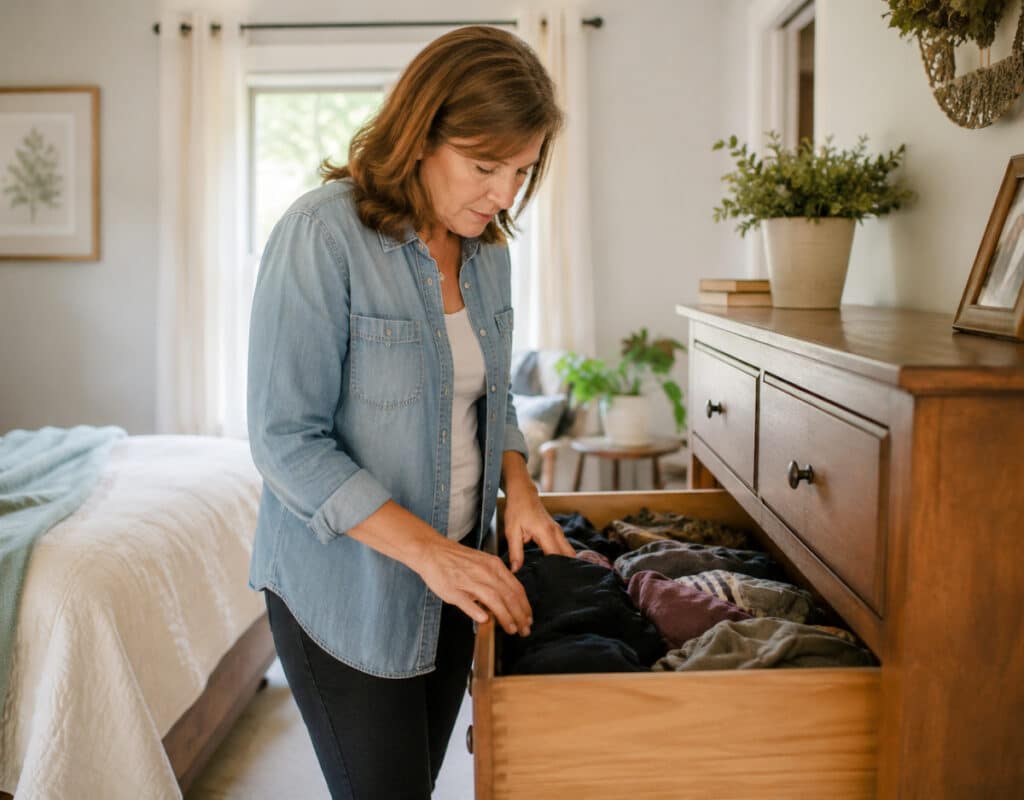
The other day I was getting dressed and reached into my drawer for my favorite pair of jeans.
As I moved a stack of leggings out of the way, I caught myself doing a double take.
Those leggings had been sitting in that drawer for years.
Not because I loved them, not even because I wore them. In fact, every time I put them on, I couldn’t wait to take them back off. They were uncomfortable, too tight, and definitely not something I reached for anymore.
So why were they still there?
Because I’d stopped seeing them.
They had become part of the drawer. Every time I reached for my jeans, I pushed them aside without giving them a second thought. My brain had simply accepted that they belonged there.
That little moment made me realize something important.
I wondered how many other things around my home I was passing over every single day simply because I’d become so used to seeing them.
And once I started looking for those overlooked items, I found them everywhere.
Why We Stop Seeing the Clutter Around Us
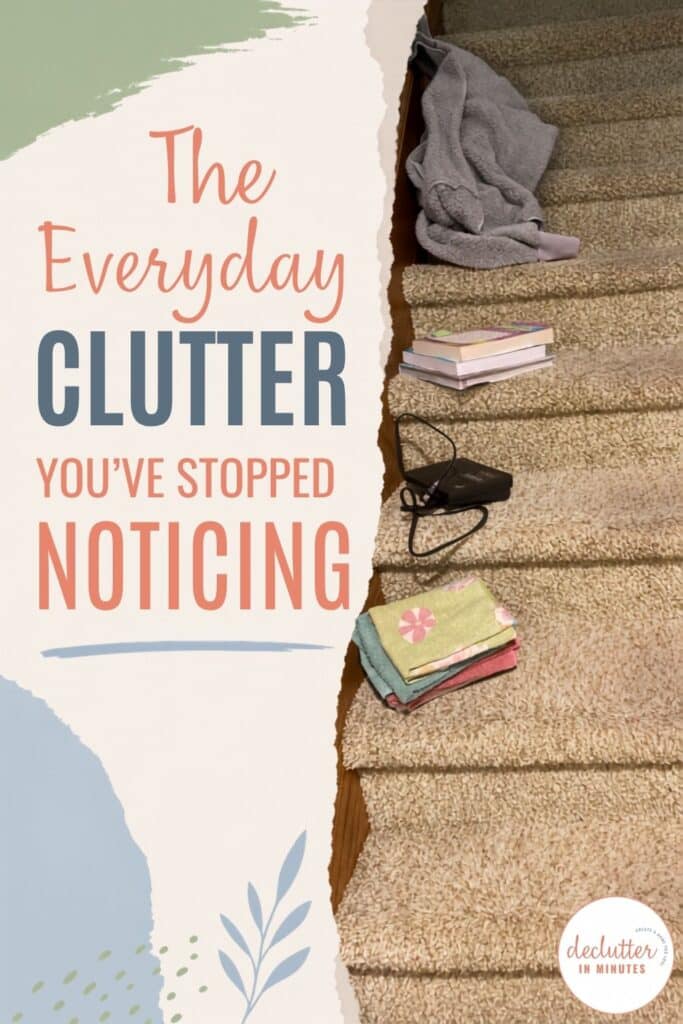
Have you ever walked into a room and suddenly noticed something that had been sitting there for months? Maybe it was a stack of papers on the coffee table, a basket on the stairs filled with random things, or a sweater that’s been hiding in the back of your closet for months.
The funny thing is, those things didn’t suddenly appear overnight. They’ve probably been there for quite a while.
The reason you didn’t notice them is because your brain has gotten used to seeing them. They’ve become part of the background, just like the pictures hanging on your wall or the lamp sitting beside your favorite chair.
Once something blends into the scenery, you stop questioning whether it still belongs.
That’s why learning how to know what to declutter isn’t always about looking harder. Sometimes it’s about looking differently.
Stop Starting With the Hardest Decisions
One of the biggest reasons people get stuck when decluttering is because they begin with the hardest spaces.
They open the bedroom closet, the kitchen cabinets, or the box of memories tucked away in the attic. Before long, every item requires a decision, every decision feels important, and the whole project becomes exhausting.
Instead, start with the things you’ve stopped noticing.
Many times the easiest things to declutter are the ones you’ve already let go of mentally…they just haven’t left your home yet.
Starting with the easier things can help you get moving. Then, when you’re ready to tackle the things that require more thought, here’s a simple way to decide what to keep when downsizing.
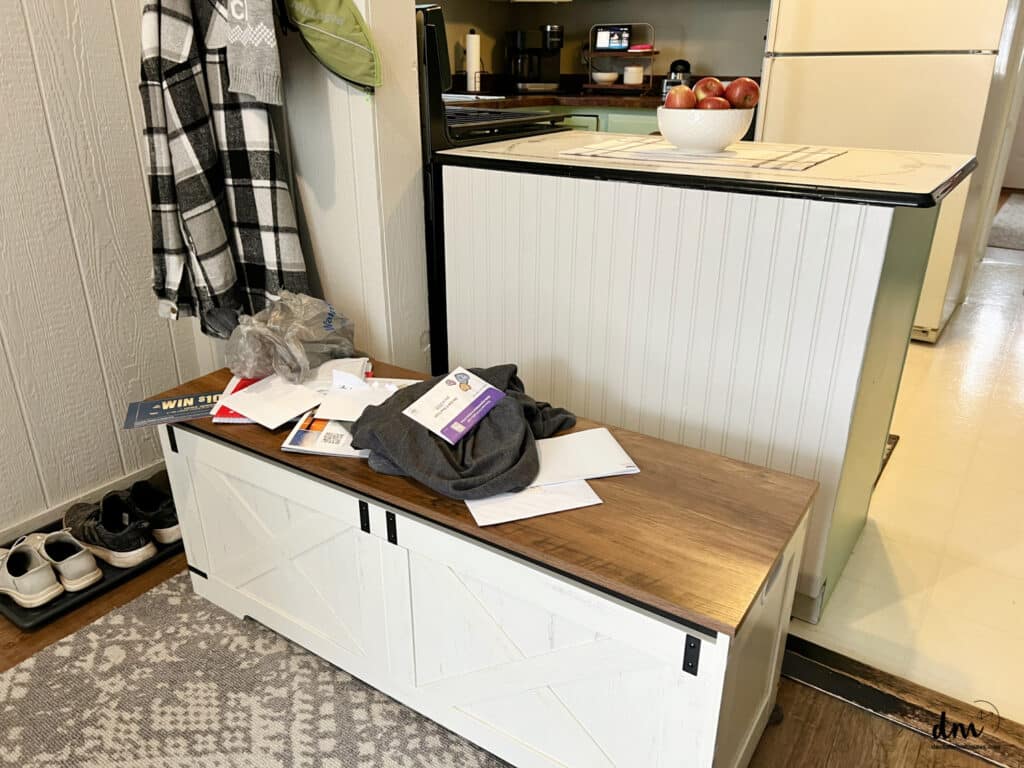
The pile of papers you’ve walked past every day.
The basket of random items sitting on the floor of the mudroom.
The shelf where things have quietly collected dust behind the items you actually use.
Those decisions are often much easier because, mentally, you’ve already let many of those things go. They just haven’t left your home yet.
When you begin there, you build momentum instead of frustration….and that can be a very good thing.
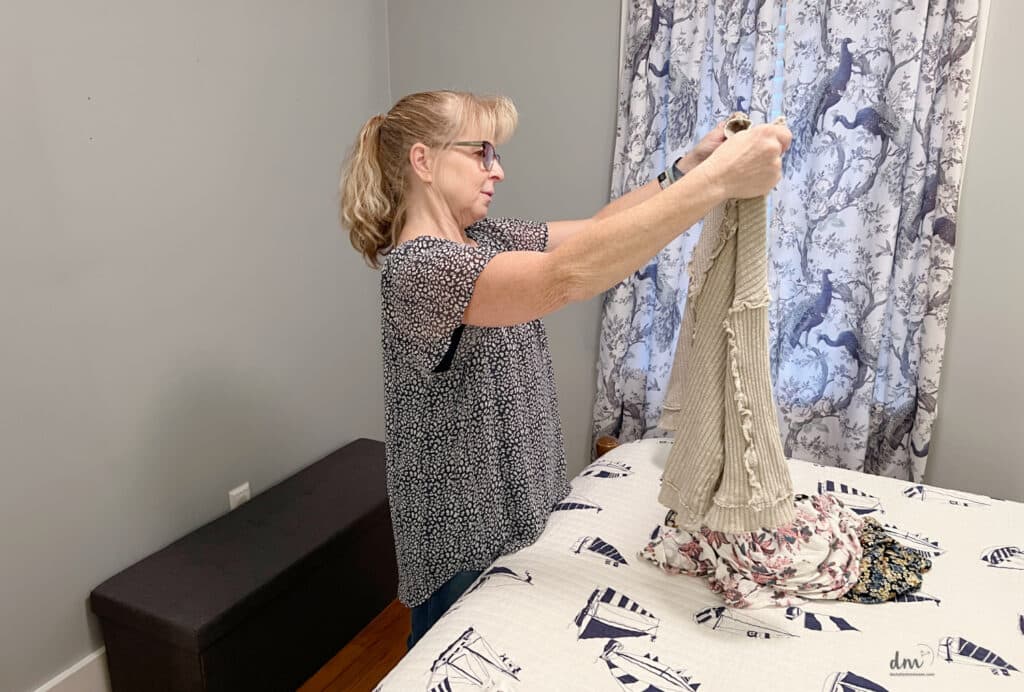
Train Yourself to See Your Home Again
The next time you walk through your home, slow down.
Open a drawer you haven’t looked through in a while. Look behind the things you use every day. Pay attention to the piles, the baskets, and the little areas your eyes normally skip over.
Then ask yourself one simple question: If I were setting up this space today, would I still choose to keep this?
You don’t need to answer that question a hundred times today. Simple set a goal to answer it once.
Tomorrow, answer it again somewhere else.
The more often you practice seeing your home with fresh eyes, the easier it becomes to notice the things that no longer belong.
One of the biggest lessons I’ve learned is that creating a home that fits your life today isn’t about getting rid of as much as possible. It’s about making room for the things that truly support the life you’re living now.
That’s the heart of what I call Right Size Living.
Instead of focusing on how much you own, you begin noticing what still serves you and what no longer belongs. If you’d like to learn more about this approach, download my free Right Size Living Guide.
Final Thoughts
Decluttering doesn’t always begin with a trash bag or a donation box.
Sometimes it begins with simply noticing.
Noticing the things you’ve walked past for months. The items you’ve pushed aside without thinking. The everyday clutter that quietly blended into the background until it became part of your routine.
Those overlooked items are often the easiest place to start because many of the decisions have already been made in your mind.
You just haven’t made them in your home yet.
And sometimes, that’s all it takes to finally get unstuck.