
Gradual Decluttering
Gradual decluttering is a slower, more practical way to remove the excess from your home. Instead of tackling an entire room in one exhausting weekend, you work in small areas and make progress a little at a time.
This approach is especially helpful when you’re busy, easily overwhelmed, or simply don’t have the time or energy for an all-day sorting marathon.
Stick with me, because I am going to show you how to declutter using the gradual method, along with the simple trick that helped me make progress without turning my entire house upside down.
Quick Answer: What Is Gradual Decluttering?
Gradual decluttering is the process of removing excess items from your home a little at a time instead of trying to declutter everything in one day. By focusing on small, manageable areas, you can make steady progress without feeling overwhelmed or turning your entire home upside down.
Years ago, my messiness finally came to a head, and I was ready to declutter my entire home.
The problem was, I had no idea where to start.
In that moment, it felt like I was staring up at one giant, impossible mountain.
I remember making a big, dramatic announcement to my family: “Nobody step foot in the kitchen for the next three days. I’m tackling it ALL!”
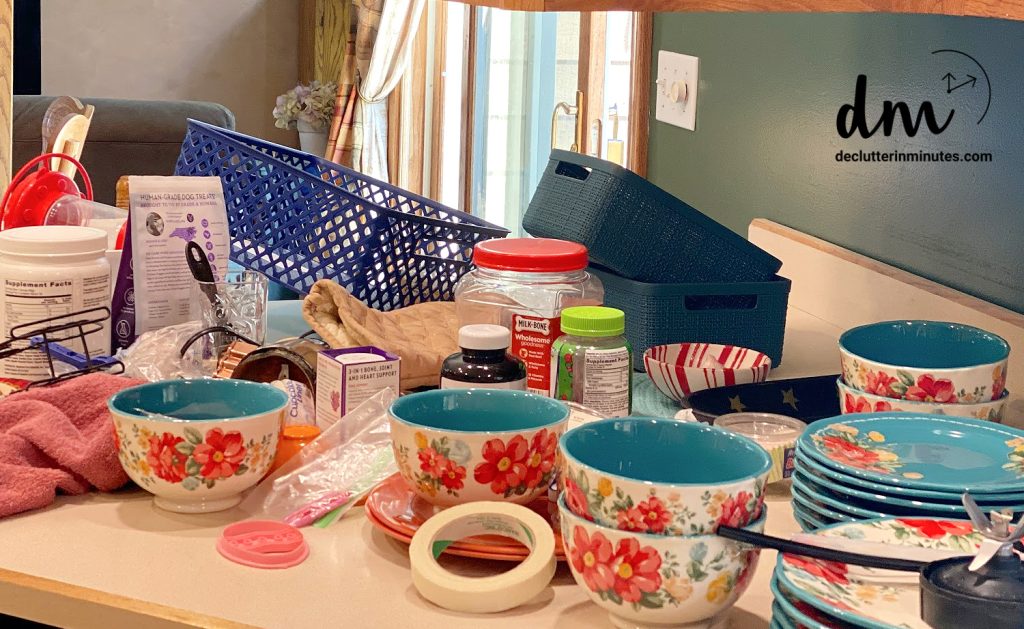
Then I got to work emptying cabinets, dumping out drawers, and making piles all over the counters and floor.
This crazy way of cleaning out all the stuff in one room was my feeble attempt to declutter and organize my home.
The problem was, three days soon turned into seven, and I found myself giving up before I was even close to being done.
What did I quickly figure out?
This all-or-nothing approach made everything ten times messier. Trying to declutter an entire space all at once just did not work for me.
Honestly, I’m not sure it works for anyone.
Because now you are left with a kitchen that looks like a total disaster zone and a million decisions to make:
- What should I get rid of?
- What is trash?
- What can I donate?
- What absolutely has to stay?
- Where does everything go now?
It was exhausting.
I found myself wishing there was a way to quietly and calmly make progress without feeling buried under a mountain of stuff and choices. I wanted to declutter without turning my house upside down or trapping myself in a sweaty, three-day ordeal.
That is when I stumbled across what is now my favorite approach: gradual decluttering.
Instead of tackling everything at once, I could work a little at a time, make steady progress, and stop before my home turned into a complete hot mess.
You don’t have to turn your home upside down to make meaningful progress. Small, consistent steps will take you farther than one exhausting weekend ever will.
Why Gradual Decluttering Works
Gradual decluttering works because it gives you time to make thoughtful decisions instead of rushed ones.
When you’re trying to clear out an entire room in one day, it’s easy to get tired, overwhelmed, and start making decisions just so you can be finished.
Working a little at a time gives you the chance to notice what you actually use, what fits the life you’re living today, and what is simply taking up valuable space.
Right-Sized Living Reminder: You don’t have to make every decision today. Start with what is obvious and save the harder choices for another day. Progress happens one small decision at a time.
That’s one of the ideas behind Right-Sized Living. The goal isn’t to get rid of as much as possible. It’s to create a home that fits the life you’re living today.
And the best part is that those small decisions start adding up.
Before long, you’re building new habits that make it much easier to keep your home feeling calm and manageable.
One of the easiest habits to start with is spending just a few minutes each day putting away anything that doesn’t belong in the room.
Look for things like:
- Trash or recycling
- Laundry
- Items that belong in another room
It only takes a few minutes, but you’ll be surprised how much lighter your home begins to feel.
How to Declutter Gradually (Step by Step)
Let’s make this easy and stress-free. Gradual decluttering is all about breaking things down into super simple steps so you don’t get overwhelmed.
1. Start With the Obvious
Before you begin sorting through your belongings, start with the things that are easy to spot. These quick wins help your home feel better almost immediately and build momentum for the bigger decisions ahead.
Throw away the trash.
Grab a trash bag and walk through the room picking up anything that’s ready to be tossed. If you have recyclables like newspapers, bottles, or cans, bring a second bag along too.
Finish the job.
Don’t leave the bags sitting by the door. Take the trash outside and put the recyclables in the bin. One completed task feels much better than another pile waiting to be dealt with.
Put away the strays.
Now grab a laundry basket, my favorite decluttering tool, and collect everything that belongs somewhere else. Dishes, books, shoes, mail, toys…whatever wandered into the room. Then take a few minutes to put those items back where they belong.
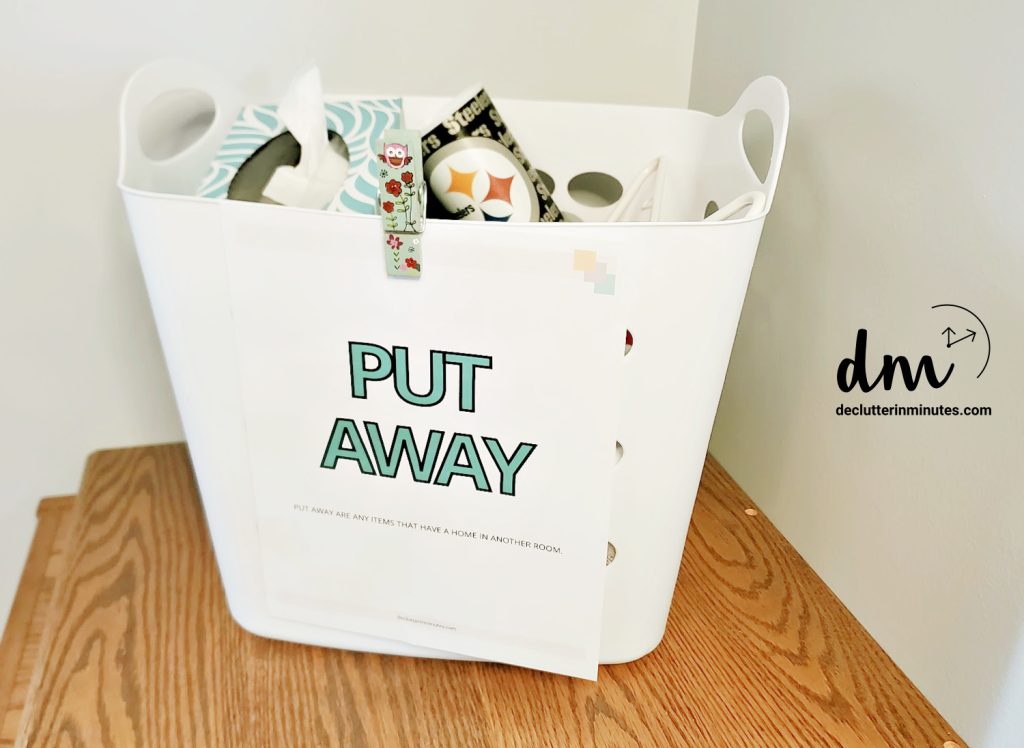
These three simple steps often make a room feel noticeably calmer before you’ve even started sorting.
2. Set Up Donation Drop Boxes Around Your Home
One of my favorite gradual decluttering tricks is keeping donation boxes in the areas where clutter naturally collects.
Instead of waiting for one big decluttering day, you can let go of things as you notice them. That turns downsizing into an everyday habit instead of another project on your to-do list.
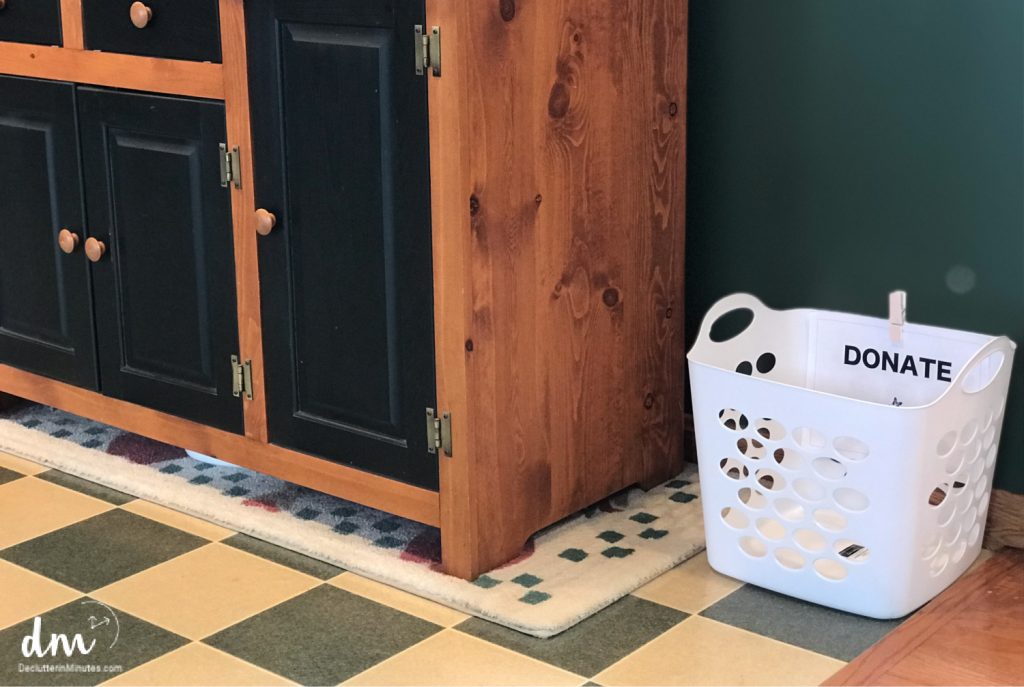
Here are a few places that work especially well:
In The Closet
Hang a donation bag inside your closet door. When you notice something you no longer wear or that no longer fits your life, drop it in the bag instead of putting it back on the hanger.
If you also have clothes that are too worn to donate, keep a second bag nearby for recycling or trash.
In Your Linen Closet
Extra towels, sheets, and blankets can pile up before you even realize it.
If you discover you have more than you realistically use, place the extras in your donation bag. Many local animal shelters are grateful for older towels and blankets.
In The Kitchen
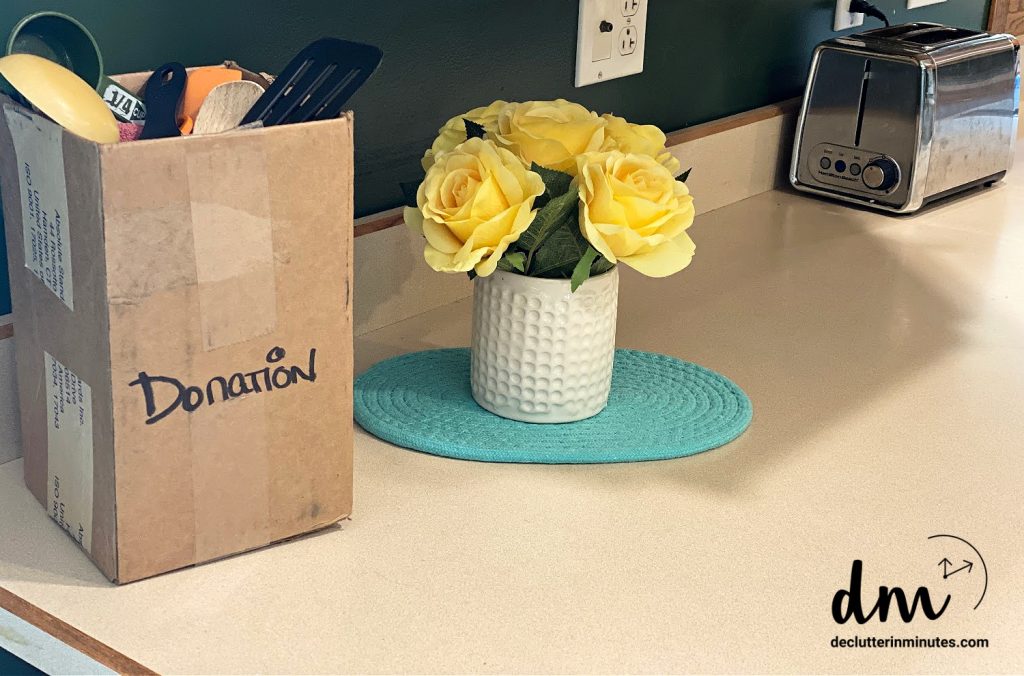
Kitchen drawers have a funny way of collecting duplicate utensils and gadgets.
Keep a donation box on a pantry shelf or tucked into a cabinet. The next time you find your fifth spatula or another measuring cup you never use, you’ll have an easy place to put it.
The Garage
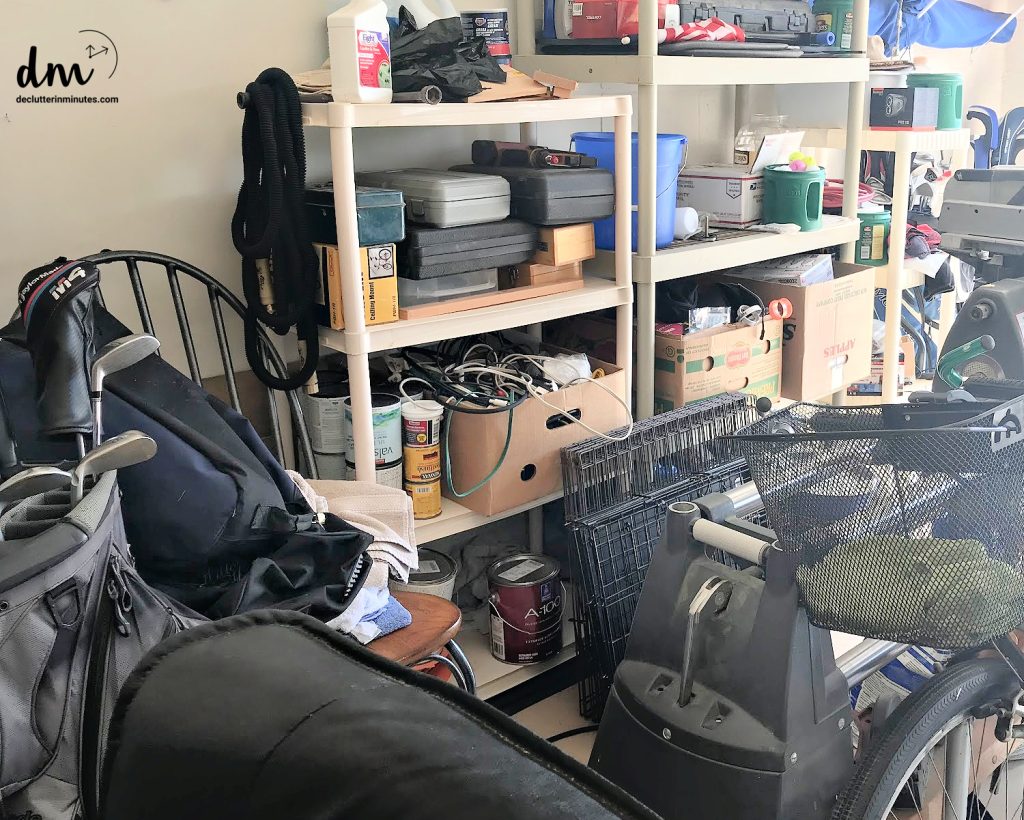
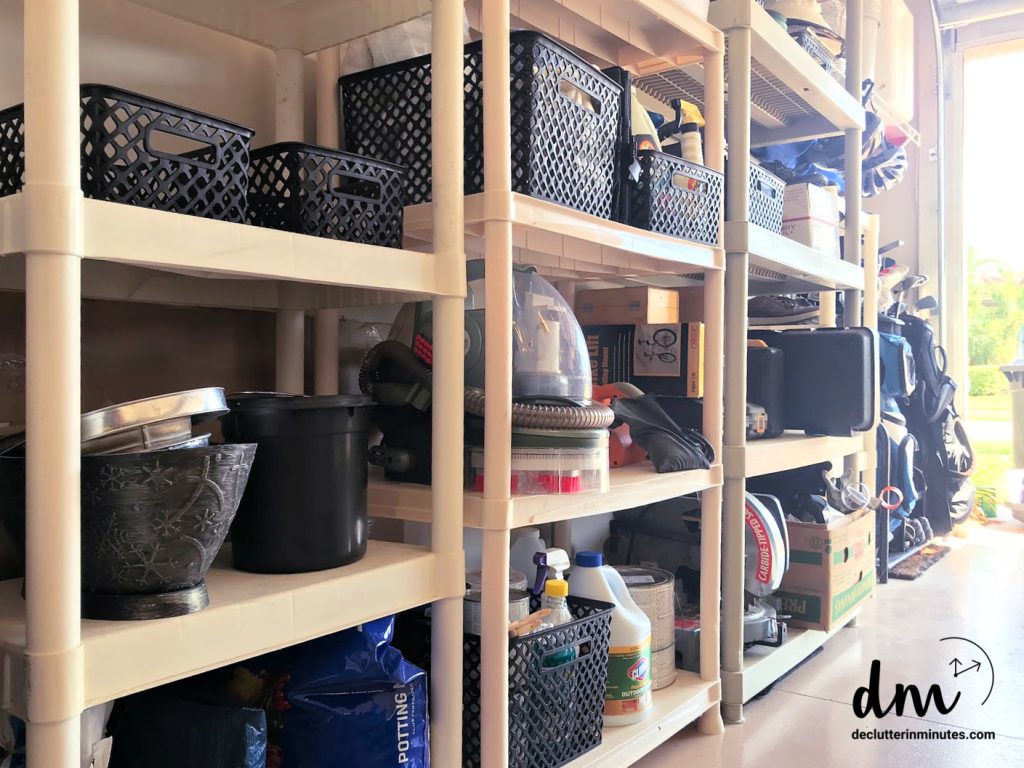
A sturdy donation box in the garage makes it easy for the whole family to contribute. Just let everyone know what it’s for so nothing disappears by surprise.
A couple of simple tips:
- Try to add at least one item whenever you notice the box.
- Put an item in the box right away so everyone knows its purpose.
The easier it is to donate something, the more likely you’ll actually do it.
3. Be Consistent
Here’s the secret that made gradual decluttering finally work for me…
I stopped worrying about how much I could get done in one day and started focusing on what I could do every day.
Instead of setting aside an entire Saturday, try giving yourself one simple goal.
Maybe it’s putting just three items into your donation box every day.
That’s it.
Three things.
It doesn’t sound like much, but let’s do the math.
Three items a day adds up to close to 100 items leaving your home every single month. Keep that up for six months, and you’ve removed nearly 600 things without ever feeling like you had to tackle your whole house in one weekend.
That’s the power of consistency.
You don’t need huge bursts of motivation. You just need a habit that’s easy enough to repeat tomorrow.
Three things today.
Three things tomorrow.
Three things the next day.
Before long, you’ll be looking around wondering where all that clutter went.
4. Fill it Up – Get it Gone
This is the step that keeps donation boxes from becoming permanent decorations.
As soon as a donation box or bag is full, close it up and put it in your vehicle.
Then set a reminder on your phone to drop it off the next time you’re out running errands.
The faster donations leave your home, the less likely they are to find their way back inside.
Remember, This Is a Marathon, Not a Sprint
One of the biggest reasons gradual decluttering works is because it gives you time to build new habits instead of relying on motivation alone.
Some days you’ll fill an entire donation box. Other days you may only find one or two things to let go of.
Both days count.
Little by little, you’ll begin making better decisions, creating routines that are easier to maintain, and building a home that’s simpler to care for.
That’s the real goal. Not finishing as quickly as possible, but creating changes that actually last.
Final Thoughts on Gradual Decluttering
Gradual decluttering taught me something I wish I’d learned years earlier.
You don’t have to turn your home upside down to make meaningful progress.
A few thoughtful decisions each day are far more powerful than one exhausting weekend that leaves you overwhelmed and ready to quit.
If you keep showing up, even for just a few minutes at a time, those small decisions will start changing your home. More importantly, they’ll change the way you think about the things you own.
Before you know it, you’ll look around and realize your home feels lighter, easier to manage, and a whole lot more like home.
And the best part? You never had to turn your entire house upside down to get there.
Frequently Asked Questions About Gradual Decluttering
Yes! For many people, gradual decluttering is actually easier to stick with than trying to declutter an entire room in one day. Working in small, consistent sessions helps you avoid feeling overwhelmed while building habits that last. Over time, those small efforts can completely change the way your home looks and functions.
There isn’t a set timeline because every home and every family is different. The goal isn’t to finish as quickly as possible. It’s to make steady progress without turning your home upside down. Even spending just 10 to 15 minutes a day or donating a few items each day can make a noticeable difference over time.
That’s actually one of the biggest benefits of gradual decluttering. You don’t need hours to make progress. Throw away the trash, return a few items that belong elsewhere, or add three things to your donation box. Those small actions may seem insignificant in the moment, but they add up faster than you might expect.
My mother would like to de-clutter her house this year, which is why she has decided to start looking for a self-storage where she can place most of her things. Thank you for sharing here as well the importance of recycling the other belongings. I also agree with you that the items must be labeled too.
Good luck!