
How to Organize Family Recipes
Trying to figure out how to organize family recipes can feel like wrestling a tornado made of handwritten cards, clippings from 1983, and screenshots from your aunt’s Facebook. Between grandma’s gravy scribbles and your friend’s famous banana bread, it’s easy for things to spiral into a chaotic mess. But getting these treasures in order isn’t just about tidying up, it’s about turning kitchen chaos into calm.
When your favorite meals are easy to find, it totally transforms your kitchen organization game. No more digging through drawers or flipping through ten different notebooks. Just smooth, simple cooking, with your recipes right where they belong, safe, accessible, and actually usable.
Struggling to Organize Your Recipes?
There’s nothing more frustrating than trying to get dinner on the table and realizing the recipe you need has vanished, again. You know it’s somewhere, but after digging through drawers, binders, notebooks, and random piles of paper, it feels easier to just make something else.
Misplacing recipes is a common struggle, especially when we’ve gathered them over time from so many places, family, friends, food stained cookbooks, or scribbled notes during a phone call. It adds up fast, and without a system in place, it’s hard to keep track of what you have, let alone find it when you need it.
If you’re looking for a simple way to get started with organizing your home, family recipes are a great place to begin. It’s a smaller project that can still make a big impact, and it’s something you’ll actually use and enjoy once it’s set up.
Our goal today is to help you take all those scattered recipes, from notebooks, binders, digital files, and printed pages, and create a streamlined system that keeps them safe, easy to access, and ready when you need them.
Whether you’re cooking for a weeknight dinner or planning something special, having your recipes organized can take a lot of stress off your plate.

How to organize family recipes
When it comes to organizing anything, especially something as personal as treasured recipes, the key is finding a method that actually works for you. That means there’s no official right way to do it. The best system is the one you’ll use consistently and that helps you feel more in control, not more overwhelmed.
Think of it like how we store our clothes. Some people do well with everything hung neatly in a closet, while others prefer dresser drawers sorted by type, socks here, pajamas there, leggings in their own spot.
Neither is wrong. It’s just about what makes life easier.
The same goes for organizing recipes. You’ve got options, and the best approach is to pick the one that feels doable and easy to keep up with. Here are a few reliable methods to consider:
- Recipe Binder – Great for printed recipes, handwritten cards, or magazine clippings. You can organize by category (main dishes, desserts, holiday favorites) using tabbed dividers.
- Recipe Box – A classic option for index cards and heirloom recipes from family and friends.
- Filing Cabinet Folder – Perfect if you already have a home filing system and want to keep recipes nearby and tucked away.
- Accordion File – Compact, simple, and easy to label with categories or even seasons.
- Digital Folder on Your Computer – Best if most of your recipes are saved from blogs or emailed from friends. Just be sure to back it up regularly.
- Pinterest Board – Quick and visual, especially for inspiration, though it’s best paired with a more reliable method for recipes you’ve actually tested and loved.
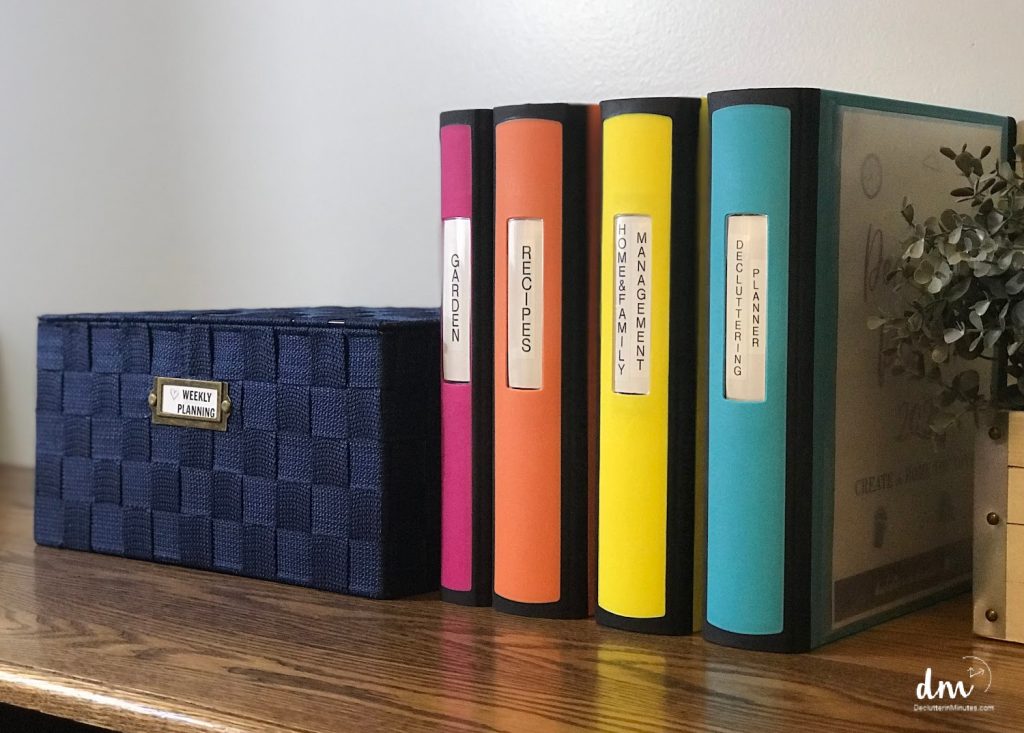
Start by choosing the method that feels like the best fit for your lifestyle. Then, give yourself permission to tweak it along the way. This is all about making your recipe collection more usable and less scattered, so you can actually enjoy the meals you’ve saved instead of just chasing them around.
Dahey Wooden Recipe Box White Recipe Organizer with 100 Recipe Cards and 6 Dividers, Recipe Card Holder Box Set with Brown Lid and Slots for Bridal Showers Weddings Cooking Lover Kitchen Better Kitchen Products Recipe Binder, Full Page 3 Ring Standard Binder Organizer Set (with 50 Page Protectors & 12 Category Divider Tabs) 11.5PECULA Recipe Book, Recipe Book to Write In Your Own Recipes, Recipe Notebook, Recipe Journal Hold 170 Recipes


Organize Recipes Step by Step
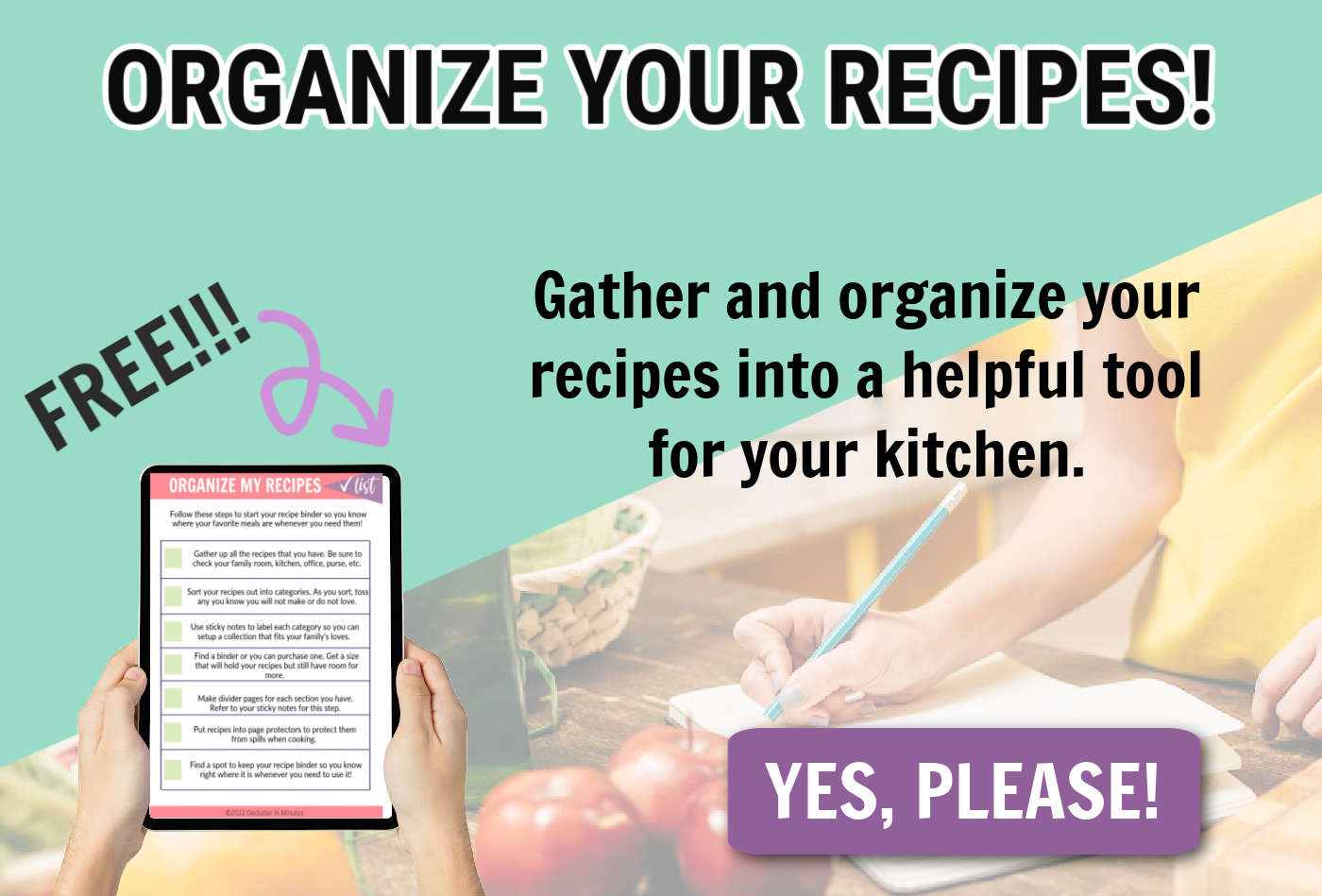
Like any downsizing or organizing project, the best way to make real progress is to break it down into manageable chunks. Step-by-step is the name of the game, especially when you’re staring down a collection of recipes that spans decades (and possibly generations). No need to rush this. Just one step at a time.
Step 1: Gather Every Recipe in One Place
First things first, round up every single recipe, no matter where it’s hiding. Check your kitchen drawers, the top of the fridge, stuck inside cookbooks, folded in old planners, and even in that stack of mail you keep meaning to sort. Peek through your purse, that random kitchen catch-all basket, and yes, even your junk drawer.
The goal here is to physically see everything you’ve got. You can’t organize what you haven’t found yet.
A large container like a small laundry basket works great for this. It’s easy to carry around as you hunt down recipes from room to room, and it holds a ton without things spilling out.
Don’t worry about sorting anything just yet, just focus on the gathering part. We’ll sort it all out in the next step.
Step #2. Sort Your Recipes
Now that you’ve rounded up your recipe collection (even the ones stuck to the fridge with that taco-shaped magnet), it’s time to start sorting. This step is all about deciding what stays, what goes, and how it all fits together moving forward.
Start by flipping through what you’ve gathered and ask yourself a few honest questions:
- Duplicates: Do you really need three chili recipes? Pick the one you always go back to and let the rest go.
- Old Favorites: Are there recipes you haven’t made in years, and realistically won’t make again? It’s okay to let them go with love.
- Someday Recipes: Have a few you’ve been meaning to try but haven’t yet? Set those aside in their own pile. They’re worth keeping, but maybe not worth mixing into your daily rotation just yet.
Once you’ve narrowed things down, it’s time to organize what’s left into categories that make sense for how you cook. You don’t need to use every category, just the ones that fit your style and the types of meals you actually make.
Here are a few possible recipe types to consider:
- Main Dishes
- Side Dishes
- Desserts
- Baked Goods
- Drinks
- Sauces & Dressings
- Crockpot or Instant Pot Recipes
- One-Pot Meals
- Quick Weeknight Options
- Potluck Favorites
- Snacks & Appetizers
- Diet-Based Categories (like Gluten-Free, Keto, Vegetarian, Sugar Free, etc.)
As you sort, keep your end goal front and center: a system that makes it easy to find the recipes you love, use often, and want to keep at your fingertips. This is all about simplifying your cooking life, not making it more complicated.
Step #3. Make Your Go-To Recipes Easy to Find
Let’s be honest, when dinner needs to happen now, no one has time to dig through piles of papers or scroll endlessly through Pinterest boards. This step is all about making your family’s most-used recipes easy to find when the pressure is on.
As you’re sorting, pull out the meals you make over and over again. The ones your family asks for regularly, the weeknight staples, and the no-fail comfort food favorites. These aren’t just nice to have, they’re your kitchen workhorses.
Here are a few quick, no-fuss ways to make sure they stay front and center:
- Create a Favorites Section – In your recipe binder, file folder, or digital folder, create a special spot just for your most-used recipes. Label it clearly so you can flip right to it.
- Use a Sticky Note or Star – For physical recipes, mark them with a colored tab or a star in the corner. Simple and easy to spot in a hurry.
- Make a Shortlist – Keep a single-page list of your top 10–20 go-to meals. Tape it inside a cupboard door, slip it into the front of your binder, or save it to your desktop. It’s your personal meal plan shortcut.
Having your favorite recipes in one place saves you serious time and stress when you’re planning meals or scrambling to feed the crew. No more second-guessing or last-minute dinner panic, just your most trusted meals, ready to go.
Step 4: Make Space to Try New Recipes
One of the biggest perks of having your recipes organized is that it opens up room to explore new ones, without adding to the chaos. When you’re not wasting time searching for what you already love, it becomes so much easier to experiment with something fresh.
As you’re sorting, set aside any new recipes you’ve been meaning to try. Maybe it’s something a friend shared, a screenshot from a blog, a magazine clipping, or a dish you saved to Pinterest months ago and forgot about. These “someday” recipes deserve a spot too, but in their own space.
Here are a few simple ways to work new recipes into your system without overcomplicating things:
- Create a “To-Try” Section – Add a labeled tab in your recipe binder or a folder in your file system. This keeps your new finds separate from the recipes you already know and love.
- Start a Digital Folder or Board – A Pinterest board or computer folder labeled “New Recipes to Try” is a great way to test drive ideas without cluttering your main recipe stash.
- Note What You’ve Tried – Once you cook something new, decide if it’s a keeper. If yes, move it to your main recipe system. If not? No guilt, just let it go.
Giving yourself the freedom to try new recipes while still keeping things organized is a total win. It helps keep your meals fresh, adds variety to your weeknight rotation, and makes cooking feel a little more fun again.
Step 5: Keep Notes on What Works (and What Doesn’t)
Recipes aren’t one-size-fits-all. As you cook, you’ll probably find yourself making little tweaks, cutting back on salt, swapping in a different veggie, or adding a spice that takes the flavor to the next level. Instead of relying on memory (especially at 5 PM when your brain is already in survival mode), jot those changes down.
You can keep your notes simple:
- Write directly on the printed recipe or add a sticky note with the changes.
- If you’re digital, add comments to a document or recipe app.
- I personally like using a Google Doc or shared folder, it’s easy to update, accessible from anywhere, and simple to share with family or friends who ask for “that one amazing casserole.”
Over time, these notes turn your recipe collection into something custom-built for your kitchen and your people.
Step 6: Create a Section for Fast Meal Options
Let’s be real, there are days when the dinner question hits and you’ve got 20 minutes and zero patience. That’s where a “quick meals” section saves the day. These are the recipes you can count on when time’s tight, energy is low, and your crew still expects to eat.
As you’re organizing, pull out any recipes that:
- Take less than 30 minutes to make
- Use ingredients you usually have on hand
- Don’t require a ton of steps or cleanup
Label this group clearly, either in your binder, file, or digital folder, so when you’re in a rush, you can go straight to that section without thinking twice. Even better? These meals are already family-approved, so there’s no guesswork or dinnertime drama.
Step 7: Honor the Recipes That Hold Memories
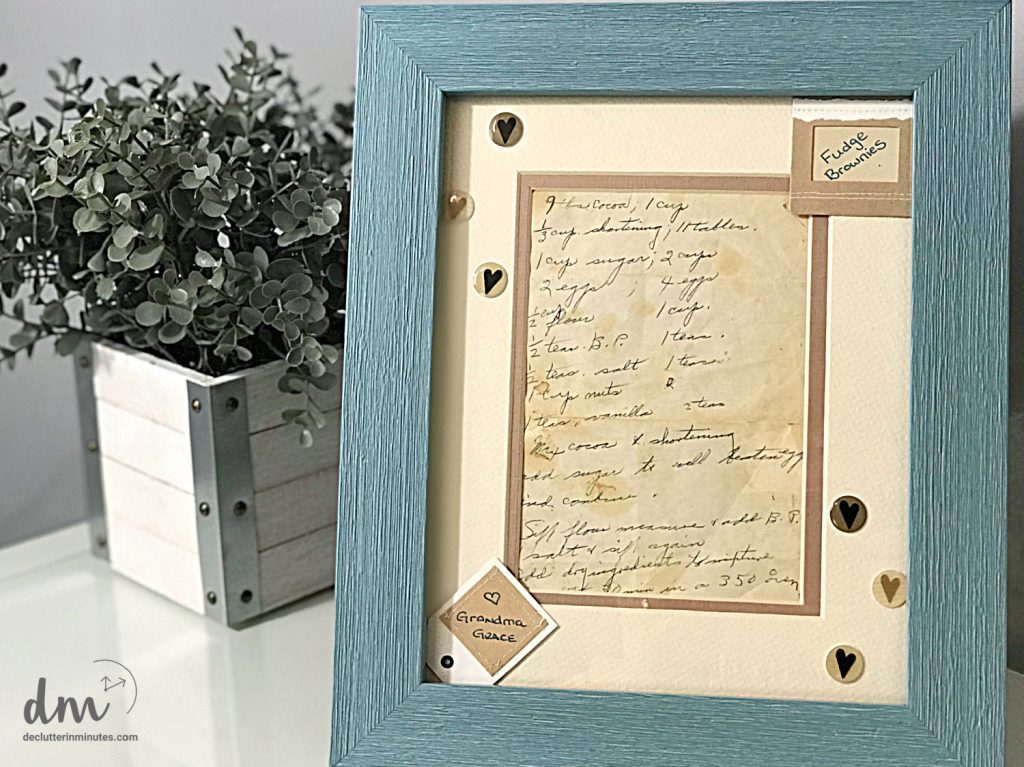
Some recipes aren’t just instructions, they’re family history. If you’re fortunate enough to have handwritten cards from a grandparent, a well-worn cookbook passed down, or recipes your family is known for, those pieces deserve a little extra care.
They may be splattered with sauce or dusted with flour, but that just means they were loved. Instead of filing them away out of sight, consider displaying one or two of these treasured recipes. It’s a meaningful way to keep that person’s memory, and their culinary legacy, alive in your home.
Here are a few simple ideas:
- Create a special “heirloom” section in your binder for family recipes you want to preserve and pass down.
- Frame a favorite handwritten recipe and hang it in your kitchen.
- Scan the card and turn it into a tea towel or wall art.
These recipes connect generations, and preserving them with intention turns your organized system into something even more meaningful, part functional tool, part family treasure.
Taking the time to figure out how to organize family recipes isn’t just about keeping your kitchen tidy, it’s about making your day-to-day cooking easier, your special occasions more meaningful, and your family traditions stronger. Whether you’re whipping up dinner on a busy weeknight or honoring a loved one’s legacy with their signature pie, having a system you can count on just makes life smoother.
Start small, stay consistent, and make the system your own. And remember, organizing your recipes doesn’t have to be perfect, it just needs to work for you.
If you’re ready to keep the momentum going, here are a few blog posts you might love next:
- Prep, Plan, Relax…Setting up a Holiday Meal Planner
- Kitchen Zones: Set Up Your Space So It Works for You
- The Lazy Guide to Downsizing Your Pantry (Without Losing Your Mind)
Other Subsections–
Your Go-to recipes for pot luck meals/parties
Menu parings your family loves
Diet restrictions–food allergies, etc. of family members or repeat guests
Oh, and one other thing, if that magazine/newspaper recipe you were going to try is still in a binder for at least a year without being tried–it might be time to let it go. Date the recipe you want to test when you put it into a folder. Purge the folder periodically.]
I have a computer word processing file that now replicates an out-of-print local church’s 1970s cookbook. I have inserted my family favorites, my original recipes, and the notes on what I changed in each recipe. I have started an addendum file that contains new recipes I added when I downsized some of my cookbook collection. [Yes–I printed it out and have emailed it to family, friends, and myself.]
I use a tablet and have recipes saved in pdf documents. I just type in what I’m looking for using the search function. It is nice that I can zoom in and make the print larger. When I find a recipe I like online, I save it to a pdf when clicking the print button. (I hope that makes sense). Sometimes I have been lazy and just used the camera on the tablet to take a picture of a recipe from one of my cookbooks or a recipe card. I just rename the file with the name of the recipe. If I am not lazy, I will type up the recipe and save it. I found a nice stand that holds it upright and it sits on my counter and stays plugged in most of the time. The only downside is if I want to write a note on the recipe. I can save a comment to the pdf, but it isn’t as easy as writing on a paper copy.
I just love the idea of taking a picture with your iPad so you can enlarge it. I will definitely need to use that tip for myself!