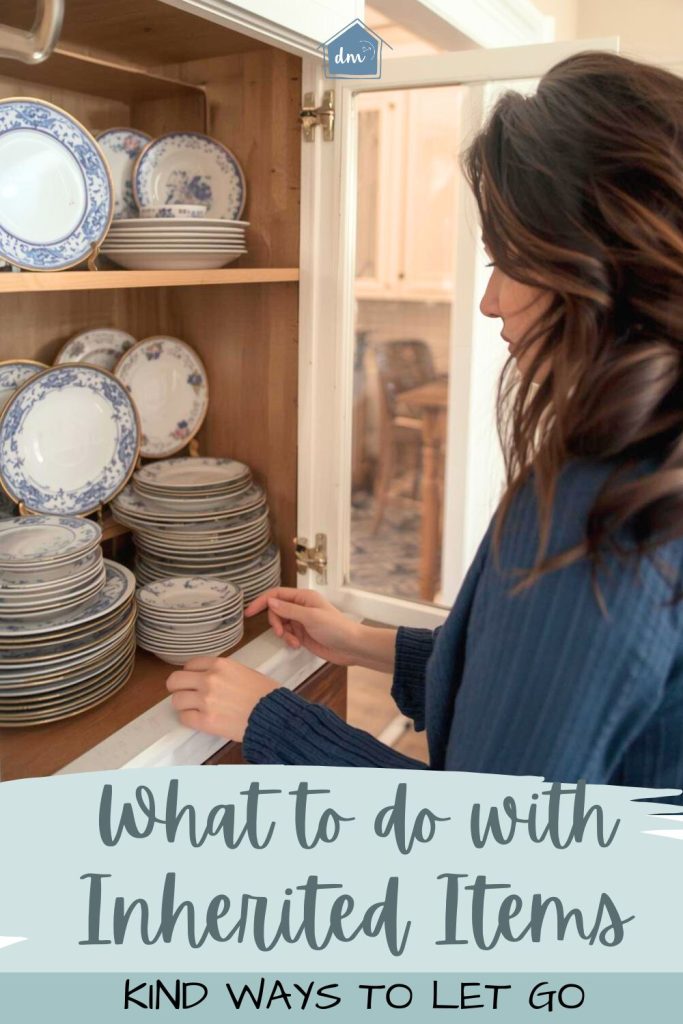
What to Do With Inherited Items You Don’t Actually Want
Figuring out what to do with inherited items can feel overwhelming, especially when you’re trying to honor someone you loved while still creating a home that supports your life today. This is where Downsizing 101 truly begins, learning how to keep what matters to you and how to gently let go of what doesn’t.
The truth is, you don’t have to keep every item passed on to you. You get to choose the pieces that make you smile, work in your home, and support the way you live now. Everything else can be appreciated and thoughtfully rehomed. This guide will help you make those choices with clarity and compassion.
I’m not sure what it is about me, but people love to give me things. When our kids were little, it was trash bags full of clothes. Later it was extra tools, leftover wood, knick-knacks, and dishes. If someone in the family had something “extra,” my name was the first one they thought of.
At first, I brushed it off as kindness, something I should simply accept. I had an incredibly hard time saying no. If someone wanted to pass something on to me, I said yes every time. I didn’t want to disappoint anyone, and in my mind, saying no felt like doing exactly that.
So I took it, and into my house it went.
It wasn’t until much later that I realized I’d painted myself into a corner. My home wasn’t just full of our belongings; it was full of everyone else’s too. And I stayed stuck in that corner for a long time.
Saying no can be difficult for anyone to hear, but it can be done with kindness and gratitude. You can set boundaries without hurting someone’s feelings, and doing so protects your space, your peace, and your future.
What to Do With Inherited Items When You Don’t Actually Want Them
Sometimes the hardest part isn’t deciding what to keep, it’s admitting that you don’t actually want half the things that landed in your lap. And that’s okay. Truly. You’re not ungrateful, unsentimental, or cold-hearted. You’re simply a person trying to live in a home that feels like yours again.
So before we dive in, take a breath. You don’t have to wrestle with guilt or hang on to things out of pressure or loyalty. You just need a clear, gentle way to move forward.
Start by Separating Emotion From Obligation
Inherited items bring a lot more than wood, fabric, or glass into your home, they bring feelings. Big ones. Suddenly a lamp isn’t just a lamp; it’s a symbol of love with a touch of family history, and the nagging thought that you should keep it because someone cared about it once.
But here’s the thing: feeling connected to a person doesn’t mean you’re required to keep everything they owned. It can be hard to see it at first, but love doesn’t live inside objects. It lives in memories, the stories, and the way their presence shaped who you are today.
When you can separate the emotion you feel for the person from the obligation you feel toward the item, everything gets a little lighter. You can look at each piece practically and ask, “Do I want this in my home, or am I holding it because I’m afraid to let someone down?”
And please hear me when I say this, you’re not letting anyone down. You’re simply choosing what fits in your life today. And that is more than okay.
Action Step: Choose one inherited item and sit with it for a moment. Does it remind you of someone you love, or does it simply feel like something you’re supposed to keep? Write down one sentence about why you’ve been holding onto it. That single moment of clarity is the first step toward making choices from intention, not obligation.
Remember Your Home Has Limits (And That’s Okay)
Your home has an important job, and it’s not to be a museum, a storage locker, or the family’s “just in case someone needs this someday” headquarters. Your home is meant to support your life as it is right now, not the lives of everyone who came before you.
But when inherited items start creeping into every corner, the closet, the garage, under the bed in the guest room, it’s easy to feel like you’re running out of room for your own life. And that feeling is a reminder that your home simply has limits, just like everyone else’s.
Instead, focus on how much space you have in your home. Your shelves, drawers, and rooms can only hold so much. They’ll show you what fits comfortably and what doesn’t. And when someone’s belongings begin to smother your own, it’s time to step back and reassess so you can find balance.
This isn’t about rejecting someone’s memory. It’s about making sure your home feels peaceful, functional, and comfortable to you…and yes, you deserve that.
Action Step: Find one shelf in your home that’s overflowing with someone else’s knick-knacks. Choose your single favorite piece and give it a place of honor. Then pair it with a few of your own pieces. When you let your belongings share the space, you create a shelf that feels truly yours.
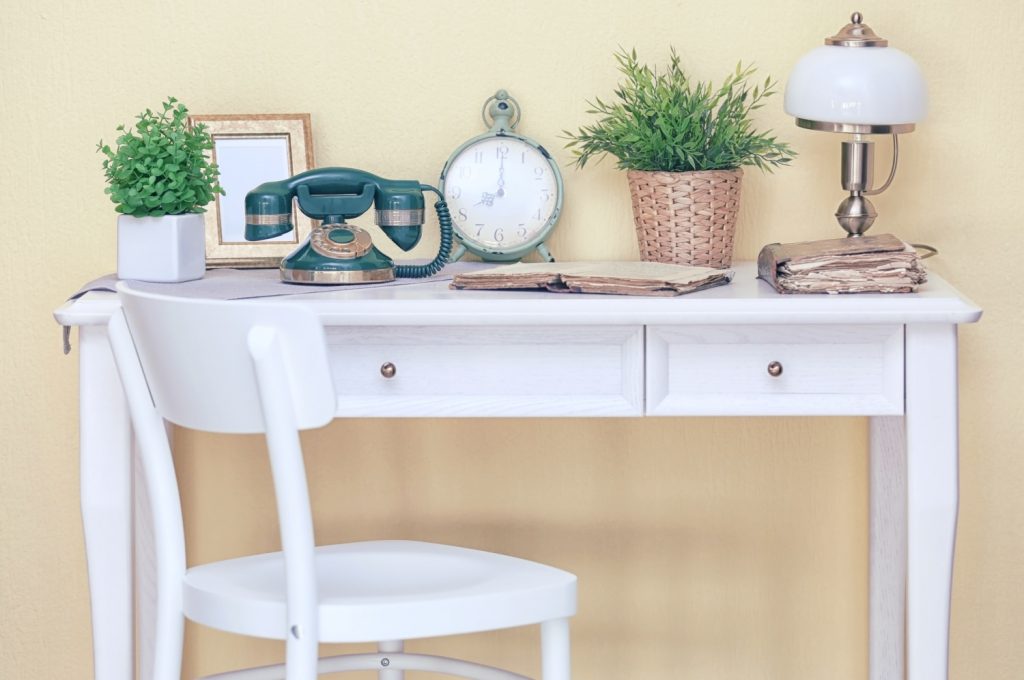
It’s About Choosing, Not Losing
When it comes to inherited items, you don’t have to keep every single thing. You’re allowed to choose your favorite pieces, the ones that take you to a certain moment, bring a song into your head, or even a smell. Those are the treasures worth keeping.
What you don’t have to keep? All of it.
The five extra dish sets, the vase you’ve never liked, or the creepy figurine collection from when you were a kid that still feels like it’s watching you.
This is your home, and you get to choose what fits. The rest can be rehomed to another family member or a new family that needs a bit of help.
Give yourself permission to pick the pieces that matter to you.
Remember, your loved one’s story doesn’t disappear when you let go of the extras, it actually does the opposite. It allows you to showcase a few special items where you can see them, smile at them, and remember the person you loved. And that’s the entire purpose.
If you are struggling to declutter after a loss, this post: Downsizing After a Major Life Change can help.
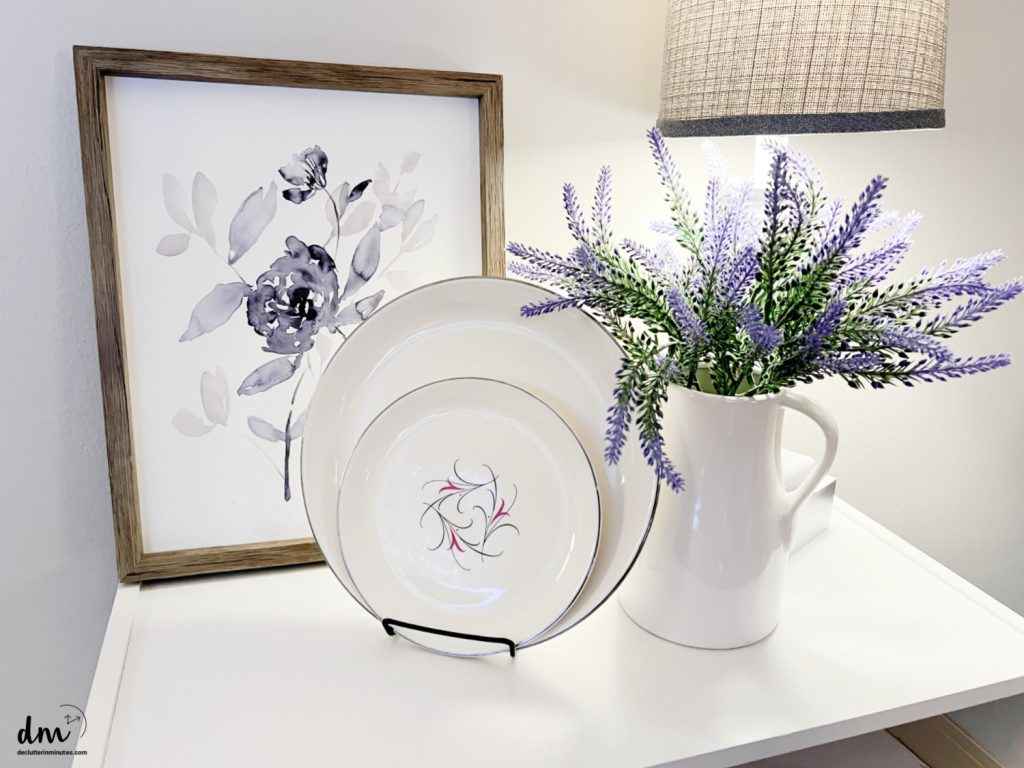
Action Step: If you’ve inherited a set of dishes, here’s a simple way to keep the memory without the clutter: choose a plate or two and place them on a stand or hang them on the wall. You keep the memory of family dinners without storing a 12-piece place setting in a box in your attic.
Rehome the Extra With Kindness Not Guilt
Once you’ve chosen the items that mean something to you, it’s time to look at the pieces that…well, don’t. And here’s something people rarely say out loud: letting go of an inherited item does not mean you’re being ungrateful. And it absolutely doesn’t mean you didn’t love the person enough.
It simply means the item doesn’t fit your home or your life, and that’s okay.
Your loved one enjoyed these things in their lifetime. They used them, displayed them, maybe even argued over who chipped them. Now you get to decide whether something belongs in your home or if it’s better off with someone else.
Here are a few ideas:
• Send a family text. Take a photo and share it with your family group chat to see if anyone wants the item. You might find someone has been hoping for it and would be thrilled to give it a home.
• Donate to a local charity. Organizations are always grateful for well-kept items. Your donation might be exactly what a family needs to get back on their feet.
• Offer it to someone starting out. A young family or a college student might be grateful for furniture, kitchen items, tools, or even decor. These things can make a big difference when money is tight.
Remember, you’re not losing anything by letting these items go. You’re simply placing them where they’ll be used, appreciated, and enjoyed. Isn’t that better than being lost in a pile of random boxes in your attic?
Action Step: If letting go still feels overwhelming, try this: take a photo of the item and write the story behind it on the back. Keep these in a memory journal where you can flip through and smile. It’s a beautiful way to honor your family with joy, not resentment.
Grandma’s Story: A Memory and Keepsake Journal for My Family (Heirloom Story Books and Guided Journals) Memories JournalThis Life of Mine: A Legacy Journal for Grandparents, Parents and Anyone to Preserve Memories, Moments & Milestones (Keepsake Legacy Journals)


Create a System That Protects Your Space (And Your Sanity)
Systems are the one step in the process that people tend to skip over. Here’s the thing: you’ve worked so hard clearing out the extras and giving your home some breathing room, and the next step is making sure it stays that way. Because somehow, inherited items have a sneaky way of finding you again.
Once you say yes a few times, people start to think it’s perfectly fine to give you everything, and that is no longer okay.
This system is simple. Nothing complicated or color-coded. Just a few gentle guardrails that stop things from piling up before you even realize it’s happening.
The next time someone offers you something, Aunt Betty’s end table, Grandpa’s old fishing gear, three boxes of nice jars, take a moment and ask:
• Do I have space for this?
• Does this fit my life right now?
• Do I actually want it…or am I just trying not to disappoint someone?
If the answer is yes and you truly want what’s being offered, great! Keep it, honor it, use it.
But if the answer is no, be okay with that too. Remember, it is okay to say no thank you. It’s how you say it that matters. Start by giving yourself a few lines to fall back on:
“Thank you for thinking of me, but I don’t have the space for this.”
“I appreciate it, but it’s not something I can use.”
You can still be kind and gracious without letting your home become the family drop-off zone. Setting a boundary doesn’t make you difficult. It makes you someone who is curating a home that fits the you of today.
And honestly? Most people tend to understand. And if they don’t at first, they usually do once they see that you’re protecting your space, not their stuff.
Action Step: Create one simple phrase you can use the next time someone tries to hand something off to you. Write it down, practice it once, and keep it handy. Having a kind, ready-to-go response makes it so much easier to protect yourself from getting backed into a corner.

When You Feel Stuck, Return to What Matters Most
Even with the best system and the best intentions, you’re going to hit moments where you feel completely stuck. Maybe you’re holding an item that brings up a swirl of emotions. Maybe you still feel guilty. Maybe you’re afraid that letting it go means letting go of the person, too. These moments are normal. They happen to all of us.
When you find yourself spinning, come back to what matters most: the relationship, not the item.
Your memories, the stories you tell, the lessons they taught you, that’s where the real meaning lives. Not in the vase, or the blanket, or even the dusty photo album.
At the end of the day, your loved one would want you to feel supported in your home, not buried under boxes of things out of obligation. They would want you to enjoy the pieces that make you smile, not feel weighed down by the rest.
So take a breath. Step back. And ask yourself a simple question: What is the kindest choice for me and my home right now? That answer is always enough.
One last thought, you’re not erasing the past by letting something go. You’re making room for your life today in a home that feels comfortable, simple and organized and most importantly, true to you.
Learning what to do with inherited items isn’t about choosing between love and letting go. It’s about finding the balance that allows you to honor your family and create a home that supports the person you are today.
Remember, I am not telling you to get it all gone, you are absolutely allowed to keep the pieces that make you smile. The trick is to honor them, not store them away.
But also, you’re just as allowed to rehome the things that don’t fit your space, your lifestyle, or your story. That’s not disrespect to them, it’s respect for you.
When you choose with intention instead of obligation, everything feels lighter. You begin to see your home as a place that holds the best of your life and tells the story of you.
So take it one item at a time. Trust yourself. And remember: it’s not about losing, it’s about choosing — choosing what stays, choosing what supports you, and choosing a home that feels comfortable.