Old-Fashioned Homemaking Tips That Still Work Today
For many women, keeping a home neat used to feel simpler. Not easier, but clearer. The old-fashioned homemaking tips our grandmothers lived by were practical, steady, and rooted in daily habits that kept things under control. Today, with bigger houses and more stuff, that clarity often feels lost.
If you have been curious about Downsizing 101 but feel unsure where to begin, looking back may be the smartest step forward. These old-fashioned homemaking tips still work today, especially when you understand how to apply them to modern life and a right-sized home.
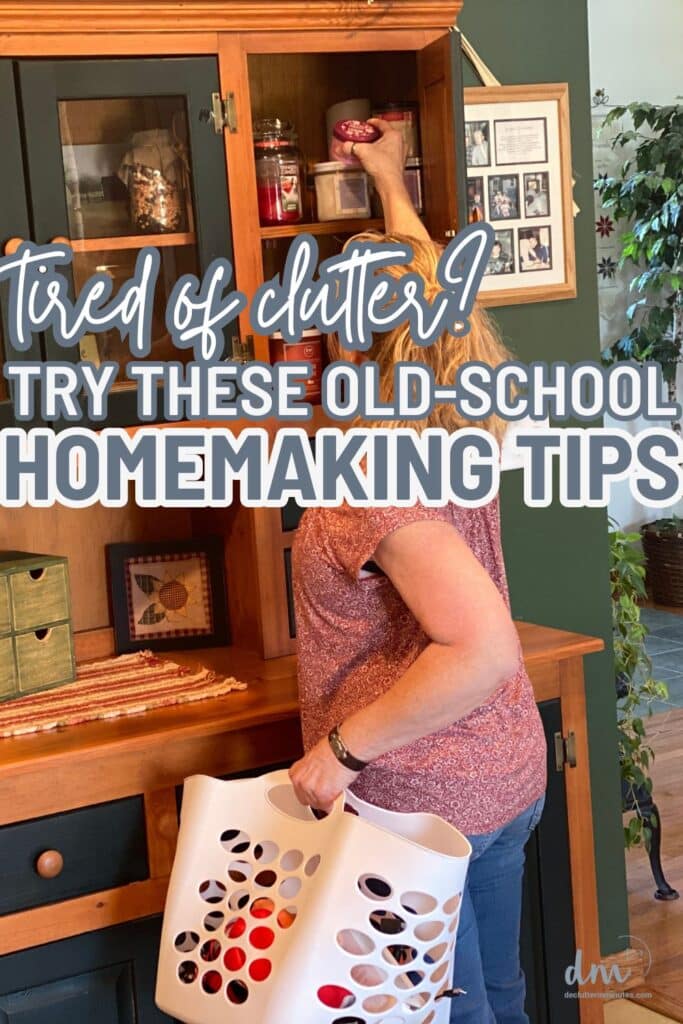
I remember my grandmother’s home, and how cozy it felt.
It wasn’t perfect. There were always a couple of piles lying around. The mail stacked next to my grandfather’s chair. The newspaper and whatever magazine they were reading in the center of the kitchen table. The latest store coupons tucked in the napkin holder.
But other than that?
Everything else was put away.
The counters weren’t crowded. The cabinets weren’t stuffed full. The floors were clear. If something wasn’t being used, it wasn’t left sitting out just in case. It went back where it belonged.
Her home felt comfortable the second you walked in. Not fancy. Not staged. Just steady. You could tell it was lived in, but you could also tell it was managed.
And I didn’t realize it at the time, but what she was really doing was setting limits. She wasn’t trying to organize more. She simply didn’t keep more than her home could comfortably hold.
That’s the feeling I’ve tried to recreate in my own home. And over the years, I’ve realized it gets a whole lot easier when you take a few of those old-fashioned homemaking tips our grandmothers practiced and give them a modern spin so they fit the homes we’re living in today.
Why These Old-Fashioned Homemaking Tips Still Work
Somewhere along the way, keeping a home started to feel complicated.
Now there’s always a new gadget. A new organizer. A new system promising to save the day. If this drawer insert doesn’t fix it, maybe that spinning bin will. If that doesn’t work, there’s another tool being released next week that claims it will finally make your home feel manageable.
We are constantly being introduced to the latest, greatest shortcut that promises to fix everything.
And yet… many women still feel buried.
When our grandmothers were running their homes, there wasn’t a new storage solution launching every Tuesday. They weren’t being told they needed a better container to feel calm. They weren’t constantly upgrading their tools.
They simply worked within what they had.
They didn’t keep more than they could manage. They didn’t treat their homes like expandable storage units. They used what they had until there was no use left.
And that’s the difference.
It wasn’t about having better systems. It was about having clear boundaries.
That is the piece we are bringing back. Not the past. Just the steady wisdom that kept their homes from ever tipping into overwhelm in the first place.

Tip #1. A Place for Everything
This one is classic.
A place for everything, and everything in its place.
Our grandmothers did not tolerate wandering stuff. There weren’t random objects living on the counter for weeks. There weren’t mystery piles forming in corners of every room.
If something belonged in a drawer, it went back in the drawer. If it belonged in a cabinet, that’s where it lived.
That’s why their tables were usable. That’s why their counters were clear. That’s why you could walk into their homes and feel like things were under control.
But here’s the modern shift.
Instead of just asking, Where can I put this?
Start asking, Does this even deserve a place here?
Because space in your home is not free.
Every item takes up physical room and mental energy. And when too many things are left out or crammed into drawers, your home starts becoming a struggle instead of a haven.
Our grandmothers weren’t just good at putting things away. They were selective about what got to stay in the first place.
So if something isn’t part of your current routines… if you don’t use it… if it doesn’t support the life you’re living right now… it may not need a home in your house at all.
That is the shift from simply managing clutter… to intentionally downsizing.
Let me ask you something:
Is there something sitting out in your home right now that doesn’t really belong, but you’ve gotten used to seeing it there?
Sometimes that’s the easiest place to begin.
Tip #2 Never Leave a Room Empty-Handed
This one is old-school gold.
Our grandmothers didn’t wait for Saturday to reset the house. They didn’t block off an entire afternoon to tackle clutter. They handled things as they moved through their day.
If they walked from the living room to the kitchen, they carried something with them. A cup. A sweater. A stack of mail. They were always doing tiny resets without making a big deal about it.
And because of that, nothing ever really got out of control.
Now here’s where we modernize it.
Don’t just carry it.
Close the loop.
If you’re walking upstairs with a sweater, don’t drop it on the bed. Hang it up in the closet.
If you grab the mail, don’t move it to another pile. Open it. Toss what’s junk. Put what matters where it belongs.
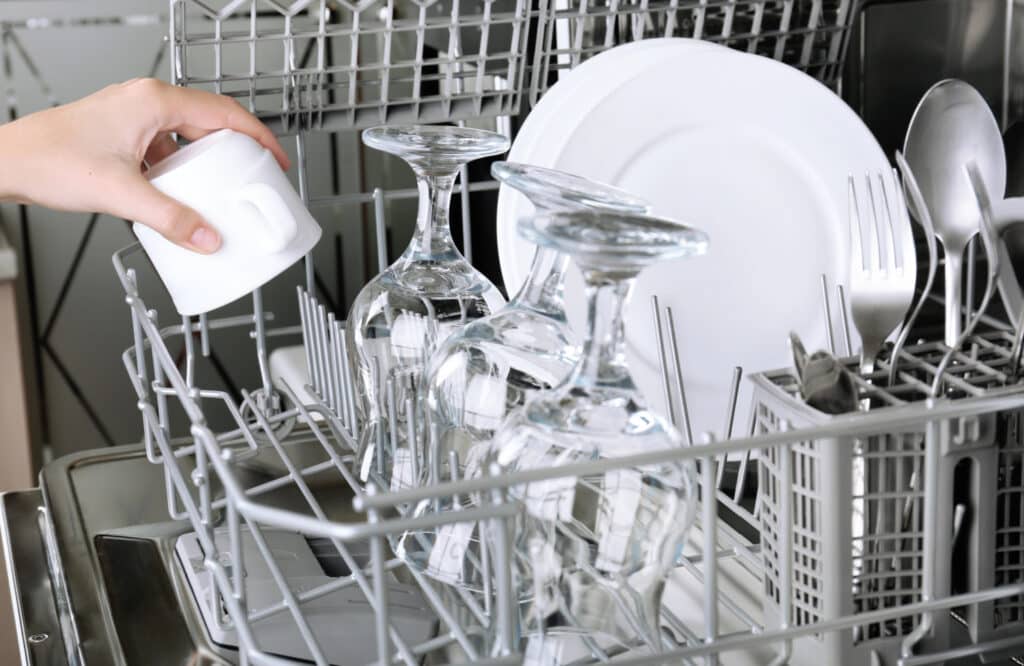
If you’re heading to the kitchen with a coffee mug, don’t set it in the sink to deal with later. Wash it or put it straight into the dishwasher.
The difference is simple but powerful.
You are not relocating clutter. You are resolving it.
And when you start closing the loop in real time, your house stops feeling like a collection of half-finished chores. You stay ahead of the mess instead of constantly chasing it.
Tip #3. They Didn’t Keep Multiples
Our grandmothers did not keep five of everything.
They had one.
Or they had just enough.
They didn’t have three junk drawers full of scissors. They didn’t have backup can openers hiding behind the “good” one. They weren’t buying extras just in case they couldn’t find what they already owned.
They kept what they used.
And they used what they kept.
Somewhere along the way, that changed.
We started buying backups. Then backups for the backups. And when we couldn’t find something, instead of pausing and clearing the space, we just bought another one.
And that’s how the cycle starts.
The more we own, the harder it is to find things.
The harder it is to find things, the more we assume we need another one.
So we buy it.
Which gives us more stuff.
Which makes it even harder to find what we already have.

And suddenly we’re not managing a home.
We’re managing inventory.
Now here’s the modern shift.
Instead of asking, Do I need another one? Ask yourself, How many of these do I realistically use at one time?
If you only ever use one… why are you storing five?
Downsizing isn’t about depriving yourself. It’s about stopping the overflow before it starts.
Because when you stop buying multiples you don’t actually need, you don’t have to deal with them later.
Tip #4. One In, One Out
Back in our grandmothers’ day, closets were smaller. Kitchens were smaller. Even drawers were smaller.
There simply wasn’t room to keep adding.
So if something new came into the house, something had to leave. It wasn’t a trendy rule. It was reality. There were limits, and they respected them.
Fast forward to today.
Our homes are bigger. Our closets are deeper. Our cabinets stretch farther than ever. And somewhere along the way, we started acting like that meant the limits disappeared.
So we bring something in… and we just make it fit.
We squeeze it in. We stack things higher. We buy another organizer to hold the overflow.
And then we wonder why everything feels crowded.
Here’s the modern shift.
In problem areas, it’s not one in, one out.
It’s one in, two out….or even three.
If you bring home a new top, look for three you haven’t worn in months. If a new kitchen gadget comes in, remove the ones that are collecting dust.

Because here’s the truth:
One in, one out maintains the current level.
One in, three out creates movement.
And that movement is what shifts you from simply managing clutter to intentionally downsizing your home.
Tip #5. They Rotated Clothing by Season
When the season changed, their closets changed.
Winter clothes went out. Summer clothes came in. That was it.
They weren’t staring at four seasons crammed into one rod. They weren’t digging through heavy sweaters in July just to find one short-sleeve top that worked.
There was space.
And because there was space, getting dressed wasn’t overwhelming.
Now here’s the part that matters.
Their closets weren’t stuffed with options. They were stocked with what they needed.
There’s a difference.
Today, we keep everything in reach. We mix seasons. We hold onto things just in case. We buy because something new pops up or because we’re bored with what we have.
But wanting something new is not the same as needing it.
Right-sizing your closet means aiming for just enough.
Enough options that you feel put together.
Enough variety that you don’t feel restricted.
But not so much that your clothes are fighting for space and you’re overwhelmed before your day even starts.
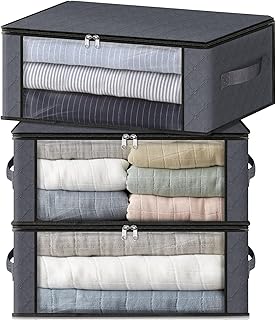
Budding Joy 90L Under Bed Storage Containers, Closet Organizers and Storage Bins, Foldable Underbed Storage Bags for Linen Sheets, Blanket, Clothing, Comforter, Sweaters, Pillows, Wrapping Paper, Grey Nicetree 18-Pack Vacuum Seal Bags with Rechargeable Wireless Pump | 3 Sizes (20/24/28 Inch) Travel Vacuum Storage Bags for Clothing, Bedding & Seasonal Storage | Space Saver for LuggageHomeHacks Storage 3-Pack Clothes Organizer Storage Bags Foldable Storage Box with Large Clear Window Sturdy Handles for Closet, Dorm, Pillows, Bedding, Clothes, Blankets, 35L, Gray


If your hangers are crammed together, that’s not abundance.
That’s overcrowding.
And overcrowding often leads to more shopping… because you can’t clearly see what you already own.
Our grandmothers didn’t need bigger closets.
They had just enough.
What Our Grandmothers Really Understood
Here’s what I really want you to see.
Our grandmothers weren’t better at organizing than we are. They weren’t following some magical system we missed.
They simply lived within capacity.
They didn’t overbuy and they didn’t treat their homes like expandable storage units.
They understood something we’ve slowly forgotten, just because you have the space doesn’t mean you should fill it.
Somewhere along the way, we started believing that if we just found the right container, the right gadget, or the right organizing method, we would finally feel in control.
But control doesn’t come from fitting more in.
It comes from deciding what actually deserves to be there in the first place.
Right-sized living is about having just enough for the life you’re living right now.
And when you start making decisions from that place, when you stop buying multiples you don’t need, when you close the loop instead of relocating clutter, when you respect the limits of your space, something shifts.
Your home feels lighter. You feel calmer.
And your house starts working for you again in a comfortable and supportive way.
You don’t need a new gadget or a bigger closet. You just need clear boundaries and the confidence to honor them.
And that’s not old-fashioned.
That’s timeless.