Organize Old Paperwork? Do This First Before Sorting Anything
Paper piles have a way of quietly taking over a home. If you have ever wondered how to organize old paperwork, it can feel overwhelming when years of documents have built up around your house. A stack of statements here, a drawer full of receipts there, and suddenly it feels like a project that will take an entire weekend.
If you are working on simplifying your home, this simple approach fits right in with what I teach in Downsizing 101 and it can help you move forward without feeling buried under years of old paperwork.
My Paper Breaking Point
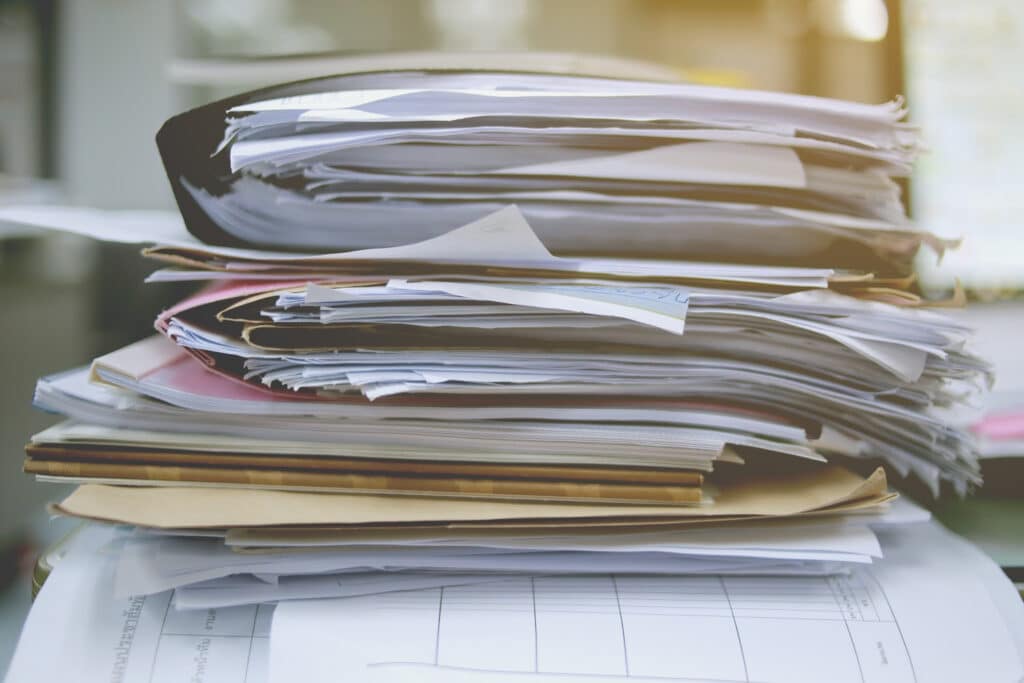
A few years ago, paper had quietly taken over parts of my house without me really noticing it. I had boxes in the attic, totes mixed in with Christmas decorations, and even a few bags of random receipts from heaven knows when.
Nothing was labeled and everything was scattered around with no sense of order.
If I ever needed to find something, it turned into a full scavenger hunt just to locate the boxes before I could even start looking for the document inside.
And like a lot of people, I kept telling myself the same thing. Someday, I’ll sit down and sort through it all.
But the truth was, the idea of sorting through years and years of paperwork felt exhausting before I even started. So nothing happened. And for the longest time I only added to the problem.
Eventually I realized something important.
The real problem was not that I had old paper piles. The real problem was that they were scattered everywhere.
Once I understood that, everything about how I handled paper changed.
Why Sorting Old Papers First Makes Everything Harder
Most people assume the first step with paper is to start sorting.
You sit down with a pile and think you need to read every statement, check every receipt, and decide exactly where everything belongs.
No wonder paper feels overwhelming.
When you approach it this way, you are trying to deal with twenty years of paperwork all at once. Every piece of paper becomes a decision. Keep it. Toss it. File it. Shred it.
That is a lot of mental energy for something that probably piled up slowly over time.
But here is the part that surprises people.
You do not need to sort your old papers before you can get organized.
For archived paperwork, containment is the organization.
Instead of trying to organize every single paper, you simply organize where those papers live.
And that one small change removes almost all of the pressure.
For archived papers, containment is the organization.
A Simpler Way to Organize Old Paperwork
Instead of sitting down and trying to sort years of paperwork, a simpler way to organize old paperwork is to start by gathering it first.
Gather the Papers First
Walk through your house and gather up all your past papers. Check drawers, closets, basements, and attics. Many people are surprised how paper slowly spreads into several different areas over time.
Use Boxes You Already Have
Next, place the papers into sturdy boxes. There is no need to buy anything special. Old boxes or banker boxes work just fine.
If some of your papers are already sitting in grocery bags or small piles, you can simply place those into the box as they are. The goal is to save time and get everything contained, not slow yourself down trying to sort.
Label a Simple Date Range
Before closing each box, take a quick look inside and write a rough time frame on the outside. It does not have to be exact. Something simple like 2008–2014 or 2015–2020 is more than enough.
You are not cataloging anything. You are simply giving the box a time frame.
Tip: To estimate the date range, pull out three or four sample papers from different areas of the box. Check one from the bottom, one from the middle, and one from the top. This usually gives you a good idea of the general time frame you can write on the box.

Choose One Home for Archived Papers
Next, choose one easy-to-reach place in your home where those boxes will live. A closet floor, a basement shelf, or a small section of the attic can work well.
Be sure you choose a location that you can access on your own if you ever need to.
Keep Only Current Papers Out
Finally, only keep this year and last year’s paperwork within easy reach. This year’s papers are what you’re currently filing, and last year’s stay out for tax season. Everything older becomes archived.
Once you do this, the pressure changes.
You are no longer trying to organize twenty years of paper. You have simply given the past a place to live.
But What If You Need Something Later?
This is usually the first question people ask when they hear this approach.
What if I need one of those papers later?
That is a fair question, and I actually wondered the same thing when I first boxed up my own paperwork.
At the time, I had boxes scattered all over our attic. Some were half smashed, some were mixed in with other things, and none of them were labeled.
If I ever needed a document, it meant digging through piles just to find where the papers might be hiding.
So I gathered everything and put the boxes onto one shelving unit. I wrote date ranges on the outside so I knew roughly what was inside each box.
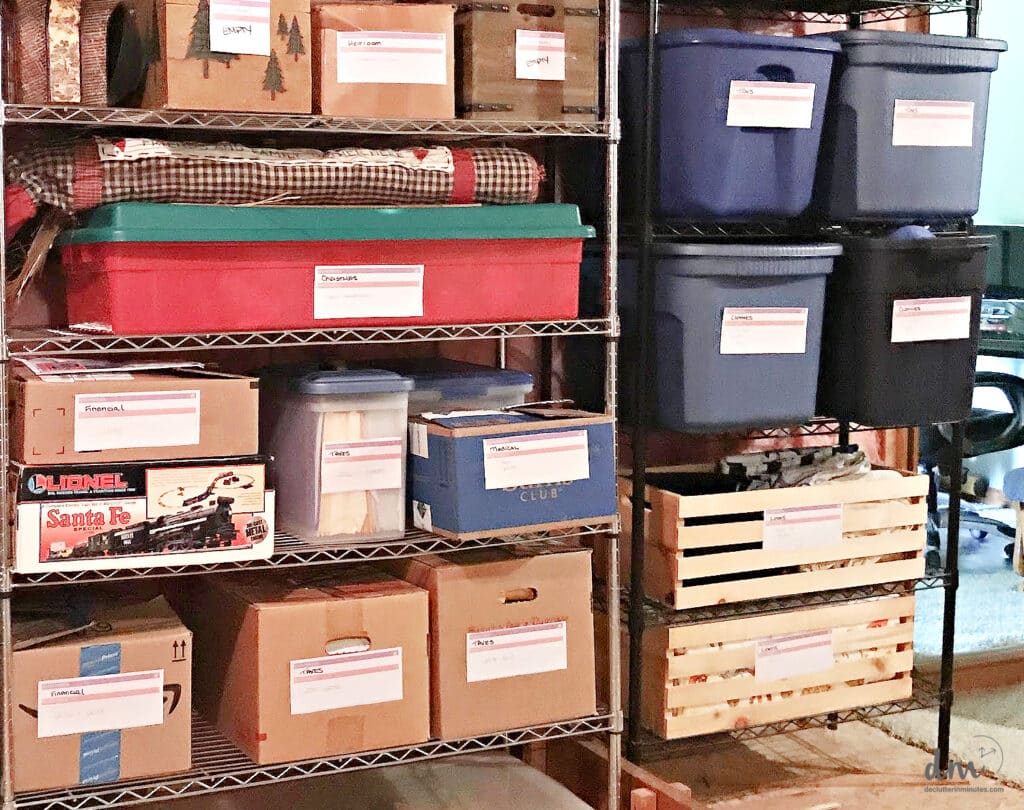
The result was eight clearly labeled boxes sitting on one shelf.
Do you know how many times I’ve needed to go back into those boxes over the last seven years?
Once.
And because everything was in one place and labeled, it took just a few minutes to grab the right box and find what I needed.
That is the real difference.
When papers are scattered, you waste time just figuring out where to look. But when they are centralized and labeled, you already know exactly where to start.
Setting Up a Simple Shredding Plan
If you have decades of paperwork, you may eventually want to shred some of the older documents. That is completely fine, but it does not have to happen right now.
Once your papers are contained and labeled, you can deal with them slowly over time.
Some people choose to shred one box a year. Others wait until they actually need to open a box and remove what they no longer need at that time.
The important part is that the pressure is gone. You no longer need to feel like it all has to be done perfectly right now.
Instead of feeling like you have to sort and shred everything before you can move forward, you now have a system that lets you handle it gradually.
And gradual progress is still real progress.
Amazon Basics 8-Sheet High Security Cross Cut Paper and Credit Card Shredder with P-4 Security, Auto Shut-off, Black Amazon Basics 8-Sheet Cross Cut Paper and Credit Card Shredder for Security, Heavy Duty, WhiteWoolsche Paper Shredder for Home,5 Sheet Desktop Cross Cut with 2.38-Gallon Basket Shredder,P-4 Security Level, 4-Mode Design, Shreds Paper/Credit Card – Durable, with Jam Proof Function for Home


Give the Past a Place
One of the biggest reasons paper feels so overwhelming is because it represents years of life. Bills, school papers, warranties, tax documents, medical records. It all adds up over time.
When those papers are scattered around the house, they carry a constant feeling that things still need to be handled.
But once everything is gathered, labeled, and placed in one location, something changes.
The past finally has a place to live.

You are no longer trying to manage twenty years of paperwork all at once. You are simply managing today.
And today is much easier to handle.
That is the real goal with paper. Not perfection. Not catching up on every document that ever crossed your kitchen counter.
This simple approach to organizing old paperwork removes the pressure to deal with everything at once.
And for a project like this, that can be enough.
Frequently Asked Questions About Decluttering Paper
You can organize old paperwork by gathering it into boxes, labeling rough date ranges, and storing it in one easy-to-access location. This approach allows you to contain years of documents without having to read and sort every piece of paper first.
No. The whole purpose of this approach is to remove the pressure of sorting everything right away.
Instead of trying to read and organize every document, you simply gather the papers, place them in boxes, and label rough date ranges. This gives old paperwork a place to live without turning it into a huge project.
If you ever want to sort through those boxes later, you can do that slowly over time.
For most households, only this year’s paperwork and last year’s paperwork need to stay within easy reach.
This year’s papers are what you are currently filing, and last year’s papers are usually needed for tax preparation. Everything older can typically be archived in labeled boxes.
That is exactly why labeling the boxes with a rough date range is helpful.
If you ever need something, you can go to the box that matches the time period you are looking for. Instead of searching your whole house, you know exactly where to start.
Most people find they rarely need to go back into those boxes once the papers are contained.