
When Your Family Isn’t on Board with Downsizing
When your family isn’t on board with downsizing, it can feel like your dreams of a simpler, more spacious home are on hold. But you don’t have to wait for everyone else to be ready before you begin. That’s the heart of Downsizing 101, helping you make meaningful progress even when the people you love aren’t quite there yet.
In this post, you’ll learn how to create small, doable shifts, open conversations that actually bring understanding, and start curating a home that reflects who you are today, without pushing, arguing, or disrupting your family’s comfort.

When I first started downsizing, my husband was totally on board… well, with some things. He was perfectly fine with me clearing out half the kitchen, happy to see fewer towels in the linen closet, and practically cheering (okay, he totally cheered) as I hauled off a few dozen boxes of holiday decorations.
But then we got to the things he actually cared about. The lawn tools. The random outdoor stuff. And the day we opened the bins of screws, pipes, and mystery tools? You would’ve thought I asked him to let go of his childhood blanket.
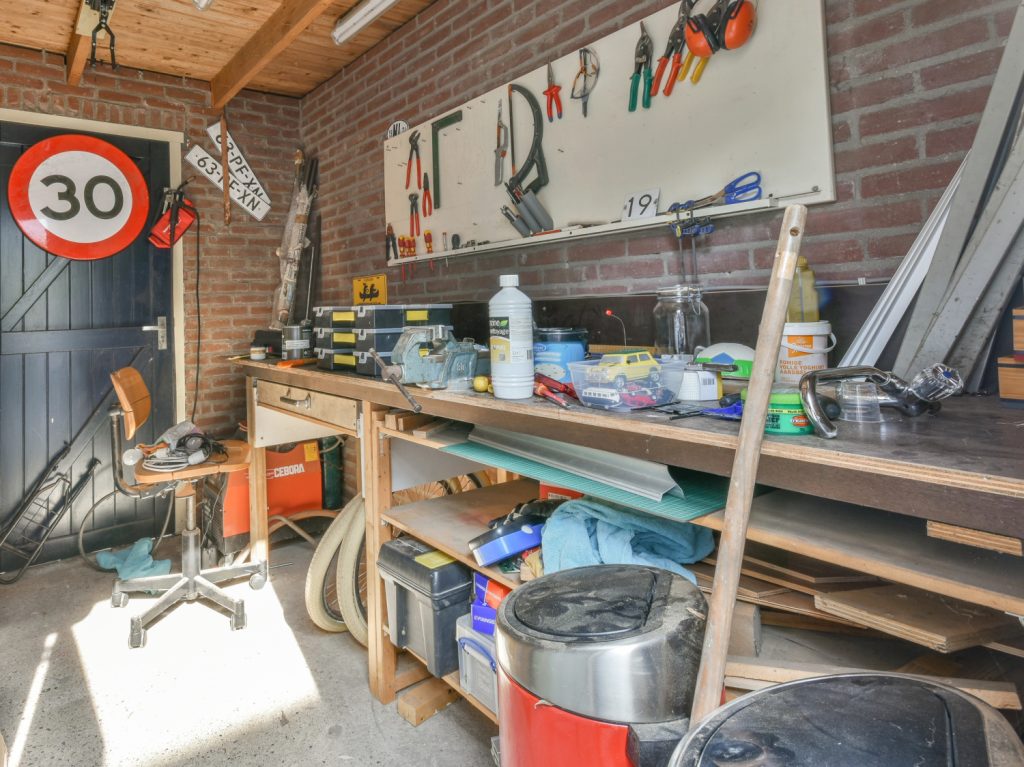
That’s when it really hit me: even with a supportive spouse, I was walking this downsizing journey more on my own than I realized.
And if your family isn’t exactly enthusiastic, or is quietly (or loudly) resisting, you know how discouraging that can feel. The good news? I’ve been there more than once, and I’ve learned a few things that can help you make real progress without turning your whole household upside down.
Why This Feels So Hard (And Why It’s Not Your Fault)
When your family isn’t on board with downsizing, it can make you question everything. You start thinking, “Is it just me? Am I asking for too much?” But here’s the truth: downsizing doesn’t come across the same way for everyone. For some of us, it feels like a breath of fresh air. For others, it feels like someone is pulling the rug out from under them.
Most of the time, your family isn’t resisting because they don’t care. They’re resisting because this process stirs up emotions they may not even have the words for. Letting go asks them to rethink what feels comfortable, and that can be a lot for someone who’s been holding onto things for years.
Just remember this: you’re not doing anything wrong. You’re simply ready, and they may not be there yet, and that’s completely okay.
When Your Family Isn’t on Board with Downsizing
When I realized I was much further along in our downsizing journey than my husband, things began to make sense. It wasn’t that he didn’t care. It was that we were standing in two different places, looking at the same house and feeling different things. And honestly? Most families are the exact same way.
Here are a few of the most common reasons your family might be dragging their feet:
1. It feels like losing part of themselves. A garage full of tools or a craft room overflowing with supplies can feel like proof of who they are, or who they used to be.
2. They’re afraid of needing something later. The “what if we need it someday?” mindset is powerful, especially for people who grew up in homes where saving everything felt like security.
3. They’re overwhelmed and don’t know where to start. When your family isn’t on board with downsizing, it’s often because the whole idea feels too big. If they can’t see the path, they pretty much avoid it.
4. They don’t share your vision (yet). You feel the weight of too much stuff, but they don’t, or, they may be so used to it that they don’t even see it anymore.
Understanding the reasons doesn’t fix your situation, but it gives you something incredibly important: perspective. And perspective can give you a bit of compassion allowing you to slow down just a bit and give them time to catch up.
Start With Your Spaces (The Easiest Way to Make Progress When No One Else Is Ready)
When your family isn’t on board with downsizing, the very first place to start is with something you can control: your own spaces. I know that might feel a little too simple, but hear me out, this is where real momentum begins.
- Your closet.
- Your nightstand.
- Your bathroom drawers.
- Your half of the home office.
- Your car (yes, that counts!).
These are the places where you don’t have to negotiate, explain, or tiptoe around someone else’s thoughts or input. You get to make decisions freely, and that alone can feel like a big relief.
And here’s the part most people underestimate: when you start creating little pockets of calm, the energy in your home begins to shift. Your family may not say anything at first (don’t hold your breath just yet), but they will notice things feeling lighter and easier. And sometimes that’s all it takes for them to start seeing things differently, even if they’d never admit it out loud.
Plus, starting with your own areas helps keep the peace because you’re not touching their things, all of which they see as incredibly important and valuable. And as the progress begins, the feel of the space shifts and that feeling can be enough to motivate them to give it a try.
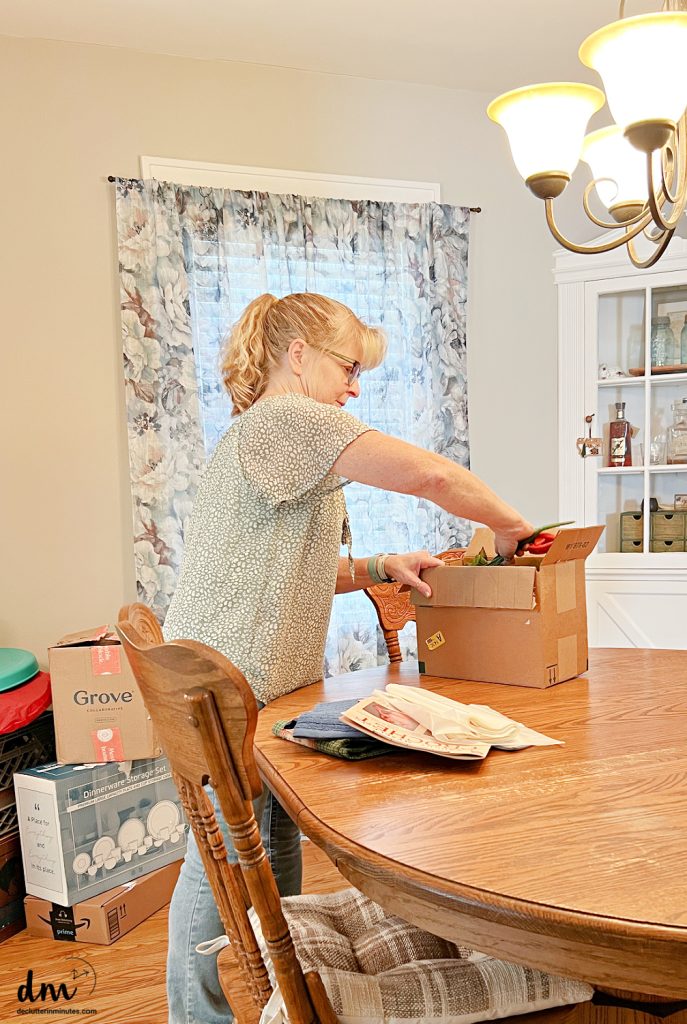
With each drawer and shelf you downsize, you’re creating pockets of calm and breathing room without waiting for everyone to suddenly wake up excited to join in. It’s progress that doesn’t require permission, heated debates, or a full-on family meeting, which is a win all by itself.
Tackle the Low-Drama Areas First
Once you’ve made progress in your own spaces, the next step is to look for what I call the “neutral zones.” These are the shared areas that don’t hold a lot of emotional weight for anyone, including your family members who are currently watching you with a panicked look in their eyes.
Think of places like:
- The laundry room
- Cleaning supplies
- Pantry extras
- The kitchen junk drawer
- The bathroom cabinets everyone uses but no one actually claims
Criusia Drawer Organizer Clothes, 10 Pack Dresser Organizer for Baby Clothes, Underwear, Sock- Foldable Closet Organization and Storage Dividers Bins for Nursery, Bedroom (Beige) SpaceHacks 25 PCS Plastic Drawer Organizer Set, 4-Size Versatile Organizer Trays & storage Bins for Makeup, Jewelry, and Gadgets in Bathroom, Bedroom and Office,Clear BlackOntel Smart Drawer Organizer, Multi-Level Jewelry and Cosmetics Storage, Black, 2.65 in


These spots are usually filled with things no one is deeply attached to… mainly because half the time no one even remembers what’s in there. That makes them a safe space for you to downsize.
Neutral zones work because you’re not asking your spouse or kids to part with anything personal. You’re simply clearing out things that are expired, broken, duplicated, or never used.
And here’s the bonus: these areas get used every day, so your even if your messy family isn’t on board just yet, they will see the improvement firsthand.
Sure, they may not say it out loud (we’re not expecting miracles here), but they will appreciate it when the pantry isn’t overflowing with stale, half-opened boxes… or when they can open a drawer without it getting stuck on two dozen kitchen towels.
And as they notice these changes, things start to shift, even if just a little. They realize it’s okay, even helpful, to let go of some things so the rest fits more comfortably.
The best part? These small wins build more momentum than you’d expect. When your family sees things becoming calmer and easier to live in, it changes their viewpoint.
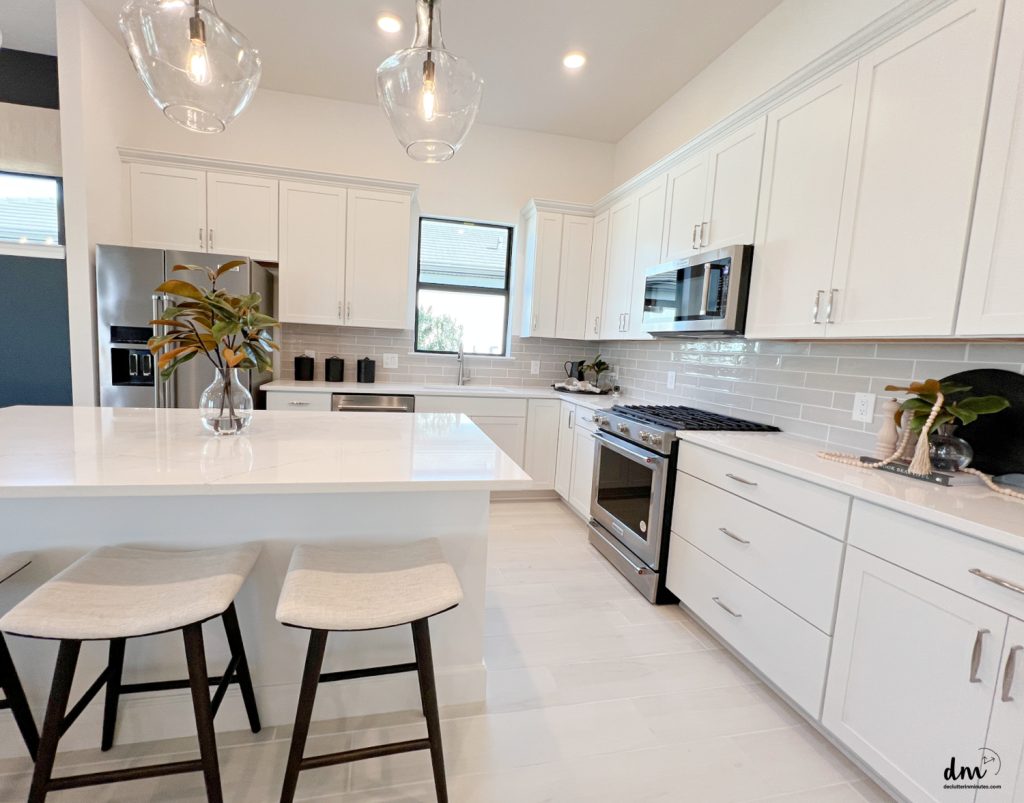
Downsizing stops looking like a threat and starts looking like… relief.
Have a Conversation
Once you’ve built some momentum, it’s time to open the door to a few gentle conversations. And I do mean gentle, this is not the moment for ultimatums, color-coded charts, or walking into the living room declaring, “We need to talk about your stuff.”
Small, kind conversations work best because they help your family understand where you are coming from without feeling like they’re being pushed into a corner.
Here are a few ways to start the conversation without accidentally triggering a battle:
“I’ve been feeling a little overwhelmed by how much I’m managing in the house. I’m trying to make things easier so our home feels calmer. I’m not asking you to get rid of anything, I just want you to know what’s been on my mind.”
This works because it shares your feelings, and isn’t demanding. No one is going to get defensive or dig in their heels ready for a battle right from the start.
“I’m working on simplifying a few areas so things fit more comfortably and I love how it is now. If there’s ever a time you want help with any of your spaces, just let me know. No pressure.”
This lets them know you’re available, not taking over.
“You may have noticed things looking a little less cluttered lately because more of it actually fits now. That’s all I’m really aiming for, a home that feels comfortable for us. I’m not asking you to tackle anything, but I did want to share how much calmer it feels already.”
Simple. Informative. Zero pushiness.
And here’s the thing: these conversations aren’t about convincing anyone. They’re simply about creating understanding. When your family feels seen and understood, they’re far more likely to soften, maybe not today, but over time.
The goal here isn’t to win them over. It’s to take the tension out of the process so everyone can breathe a little easier.
And you’ll be surprised how often a gentle approach opens the door for them to eventually say, “Hey… when you have a minute, can you help me with my stuff too?”

How to Compromise Without Feeling Like You’re Giving In
There’s a point in every downsizing journey where you realize you’re ready to keep going… and the rest of your family is still standing firmly in place. This is where it may be time to compromise. Not in a way where you abandon what matters to you, but the kind that lets the house stay peaceful while you continue making real progress.
Give yourself a few spaces where you get full say.
Your closet. Your side of the bathroom. Your nightstand. Your desk. These are the places where you can make decisions without interruption. Having even a few areas set up the way you want can bring calmness to the entire space.
Let their spaces stay their spaces.
If your spouse has a workbench that makes you want to close the door every time you walk by, or your kids’ bedrooms that are beyond explanation, it’s okay to leave those areas alone. Respecting their spaces doesn’t mean you are okay with the mess; it just means you don’t have to deal with it.
Pro Tip: If you have teenagers that live in squalor, have a quick conversation with them. Let them know you are not going to bother them about their rooms any more, but you do want the door closed so you at least don’t have to see it on a daily basis. Bonus points if you can get them to agree to no food in their rooms. This will at least keep the ants away.
Find a few shared spaces you can agree on.
Think the pantry, the mudroom or entryway, the coat closet, or the laundry room. Remember, the goal here isn’t to transform these areas into showpieces. You are looking to create manageable and functional spaces the entire family can benefit from.
Set clear expectations, without micromanaging.
You can say something simple like: “I’m keeping this area organized so it stays easy for all of us to keep put away.” It’s clear and totally reasonable, just enough to keep everyone on board without freaking out.
Let’s talk about compromise for a minute. Working with a spouse or family who isn’t exactly enthusiastic doesn’t mean you’re giving up. It simply means you’re slowing the pace while they take the time they need to catch up.
Downsizing is rarely an all-or-nothing situation. Even if your family seems resistant right now, there’s a very good chance they’ll come around in their own way and in their own time.
It may not look exactly like your level of enthusiasm, but you might be surprised by how much they eventually lean in, even if the pace is slower or a little different than you imagined.
Know When to Pause, When to Push, and When to Pivot
One of the hardest parts of downsizing with a hesitant family is figuring out your pace. Some days you feel ready to tackle the entire house… and other days one raised eyebrow from your spouse is enough to send you right back to your bedroom with a cup of coffee, and that is completely normal.
The truth is, every downsizing journey has moments when you need to stop and take a breath. These moments may require a more gentle approach or an entire shift altogether.
Know when to pause.
If things begin to get stressful or someone is clearly overwhelmed, that’s a sign to take a breather. Don’t panic, pausing doesn’t mean you’re done, it just means you are letting everyone catch their breath.
Sometimes giving everyone a little space is all that’s needed for things to settle.
Know when a gentle nudge is okay.
There will be moments when your family casually mentions something, maybe wishing a space was easier to use or getting frustrated when they can’t find anything in a certain drawer. That’s your opening for a small, low-pressure suggestion. “If you want, I can help you look through that shelf later. No rush, just let me know.”
I know it might feel a little strange to handle these moments so gently, but your goal isn’t to push them. It’s to bring them on board without sending anyone into full-on panic mode. You’re offering support, not pressure, and that’s what keeps the door open.

Know when to pivot.
If you’ve tried to work in a certain area and keep hitting a wall, it may be time to redirect your energy somewhere else. Go back to your own spaces or work in another neutral area like the guest bathroom.
This keeps the momentum going without wearing anyone down, including you.
The real trick here is learning to read the room and remember that downsizing isn’t a race. It’s a gradual change in the setup of your entire home. But not only that, it is also a shift in how you live, your habits, and everyone’s comfort. And those changes and shifts take time.
Remember, if you’re taking steps, even small (maybe tiny) ones, you’re still moving in the right direction. And that’s all that matters.
HomeHacks Storage 3-Pack Clothes Organizer Storage Bags Foldable Storage Box with Large Clear Window Sturdy Handles for Closet, Dorm, Pillows, Bedding, Clothes, Blankets, 35L, GrayIRIS USA 13 QT Plastic Storage Box with Lid and Latches – 6 Pack – BPA-Free, See-Through Organizing Solution, Durable Nestable Stackable Containers, Secure Pull Handle – ClearOnlyeasy Foldable Underbed Bags 2 Pack – Blankets Clothes Comforters Storage Bag Breathable Zippered Organizer for Bedroom with Clear Window and 4 Handles, 39.4×19.7×5.9 in, Linen-like Grey, MXDUBBP2



Before you get frustrated by what your family won’t do, I want you to take a second and picture what is possible. With each step, yes even the small and tiny ones, your home will start to feel lighter and more comfortable. A drawer that finally closes. A shelf that isn’t overflowing. A room that isn’t cluttered and messy all the time.
Bit by bit, those small changes add up.
Your family may not be fully on board yet, but they will feel the difference. Life gets a little easier. The space feels more comfortable. You breathe a little deeper.
This is the kind of progress that’s possible.
Downsizing with a hesitant family can be frustrating, but you’re making more progress than you think. These small steps matter. They add up. And they’re creating a home that feels lighter, calmer, and more like the life you want now.