Decluttering Tips for Midlife Women
Many decluttering tips were created for busy families, first homes, or younger seasons of life. But midlife often comes with different needs, different spaces, and decades of belongings. That is why some common advice can feel frustrating instead of helpful.
In this post, I am sharing five decluttering tips for midlife women that I had to flip before they finally worked in my own home. These simple shifts made progress easier, calmer, and much more realistic. If you are looking for a practical next step, learning the basics of Downsizing 101 can help you create a home that fits the life you are living now.
Why Decluttering Changed for Me in Midlife
When I was a young mom, decluttering was simply part of how I kept our busy home running. I can still remember telling my family that we were spending the weekend clearing out the garage, or announcing that dinner might be cereal because I was finally tackling the kitchen.
Back then, it made sense. So much of what we owned was tied to temporary seasons of life. Toddler clothes, baby toys, sports gear my boys outgrew almost as fast as we bought it. As life changed, it felt natural to let those things go and keep only what we still needed.
But midlife feels different.
Now it can seem like every item carries a memory. The griddle I used to make Saturday pancakes for my boys. The blanket one of my sons always grabbed for movie nights on the couch. The serving dish used for years of family dinners.

And when everyday things start holding pieces of your story, traditional decluttering tips do not work the same way they once did.
That is when I realized I did not need harsher advice or more willpower. I needed a better approach for this season of life.
Why Traditional Decluttering Tips Can Feel Harder in Midlife
If decluttering feels harder now than it used to, there is actually a reason for that.
A lot of it comes down to this season of life.
Years ago, many of us were in constant change mode. We were moving rooms around, updating spaces, replacing worn-out things, and making regular adjustments to keep up with busy households.
Things came in, things went out, and it was easier to make quick decisions.
But midlife is different.
Now the things in your home often come with stories and even everyday items can carry memories you did not expect.
That is why some old decluttering advice can feel frustrating now.
Being told to get rid of half, empty an entire room, or stop being sentimental may sound fine on paper, but it does not always work in real life. Especially when your home holds years of a full and amazing life.
What helped me most was realizing I did not need to push harder. I needed a better approach.
Once I started adjusting those old tips to fit the life I am living now, everything began to feel lighter, simpler, and much more doable.

Tip #1 Stop Hunting for What to Get Rid Of
For years, I thought the best way to make progress was to grab a box or bag and start filling it with things to donate.
The Old Advice
Find things you do not need, toss them in a box, and keep going until the box is full.
And honestly, at first it can feel pretty exciting. The box starts filling up, you feel productive, and it looks like progress is happening fast.
Why It Backfires
The problem often starts later.
You walk past the box and suddenly second guess yourself. Maybe you should keep that sweater after all. Maybe that bowl would be good for popcorn night. Maybe that candle is still fine.
So things start coming right back out.
I used to do this all the time. What started as a full donation box could end up with only one or two things left inside.
The Flip That Worked
What finally helped me was doing the opposite.
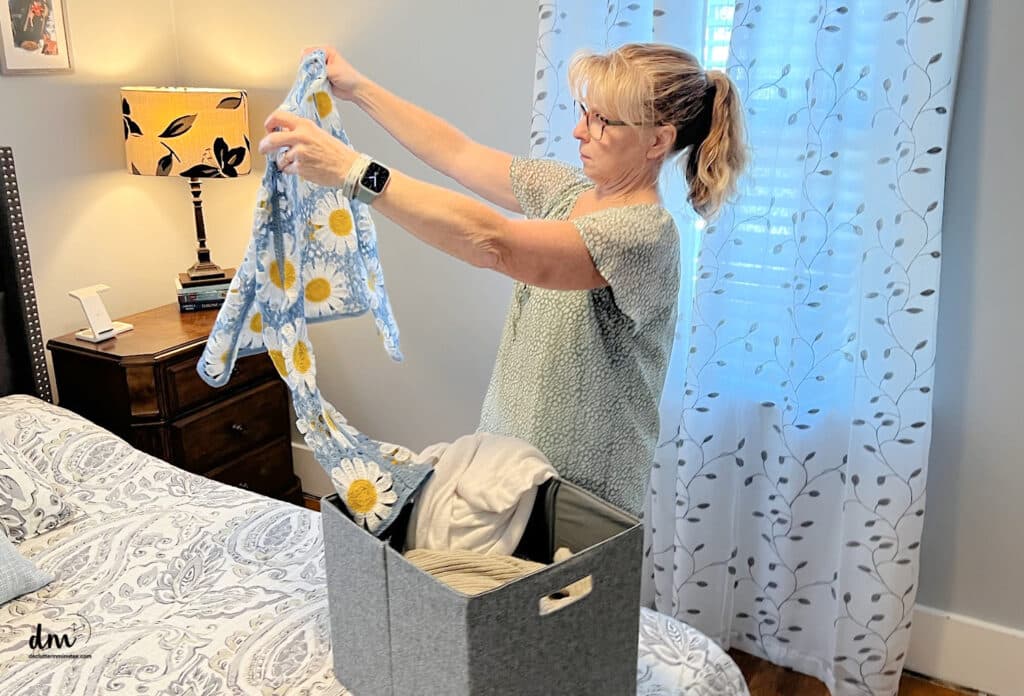
Instead of asking what should go, I started asking what deserves space in my home now.
The clothes I actually wear. The kitchen tools I really use. The pieces I enjoy having around me.
Once I chose what I wanted to keep first, whatever was left became much easier to release.
That is when downsizing started to feel less emotional and much more practical.
8 Pack Extra Large Heavy Duty Moving Bags, Clear Storage Bins with Lids, Reinforced Handles & Heavy-Duty Zippers Moving Boxes Storage Bags Totes for Clothes Packing, Dorms, College Supplies, Clear Amazon Basics Cardboard Moving Boxes for Packing and Shipping, Medium Size, 18JiatuA Car Trunk Organizer for SUV, Car Storage Organizer Collapsible Multi Compartment Container Box Adjustable Car Accessories for Women Men, Beige


Action Step
Pick one small space today, a drawer, one shelf, or one cabinet.
Instead of hunting for things to remove, choose your favorites first and put those back.
Then look at what is left. You may be surprised how much easier the next decision feels.
Tip #2 Stop Pulling Everything Out at Once
For a long time, I believed real progress meant emptying the whole space before I could begin.
The Old Advice
Pull everything out so you can see what you have.
On paper, that sounds smart. Empty the closet, clear the cabinet, dump the drawer, spread it all out, and then decide what stays.
Why It Backfires
Sometimes that works in a small space.
But when you are dealing with years of belongings, it can turn into one big situation fast.
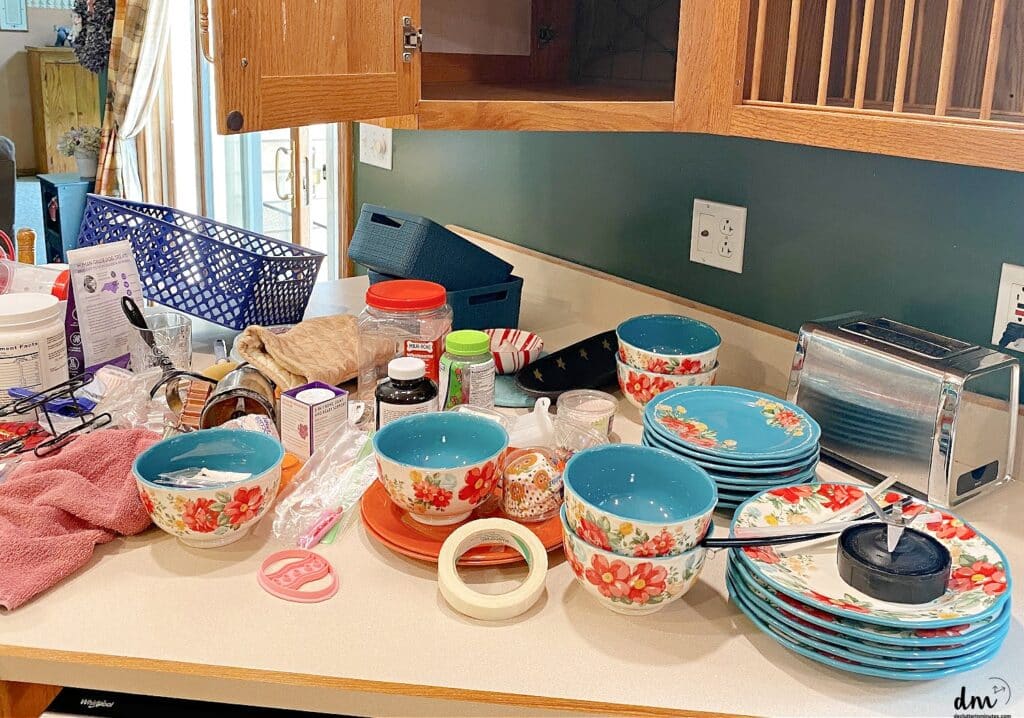
I once pulled clothes out of a closet and stacked them on the bed. Then the chair. Then the floor. Suddenly I did not have one messy closet anymore, I had an entire messy bedroom.
And after hauling everything out, who still has the energy to sort through it all?
That is where many women get stuck. Not because they cannot do it, but because the method is exhausting.
The Flip That Worked
What worked better for me was working in sections.
One shelf. One drawer. One side of the closet. One cabinet.
Small sections are easier to finish, easier to put all the way away, and much easier to repeat tomorrow.
Progress does not need to be dramatic to count.
Action Step
Choose one small section today.
It might be one kitchen shelf, one bathroom drawer, or ten hangers in your closet.
Finish that one area completely before moving on. A finished section builds momentum far faster than a room full of piles.
Tip #3 Stop Buying Containers First
For years, I thought the answer to clutter was one good shopping trip away.
The Old Advice
Buy baskets, bins, drawer dividers, and containers so everything has a place.
It sounds helpful, and sometimes it can be. We all love the idea of opening a cabinet and seeing everything neat and lined up.
Why It Backfires
The trouble is, containers do not reduce how much you own.
They simply hold what is already there.
I learned this the hard way more than once. I would buy organizers for a messy area, come home feeling hopeful, and then realize I had just created organized overflow.
The space looked better for a little while, but the problem was still the same. There was simply too much for the space.
The Flip That Worked
What finally changed things for me was making organizers the last step, not the first.
First, I chose what truly fit my life and the space I had.
Then, if something still needed a home or better function, I used a simple container to support what remained.
Many times, once I right-sized the area, I did not need to buy anything at all.
Action Step
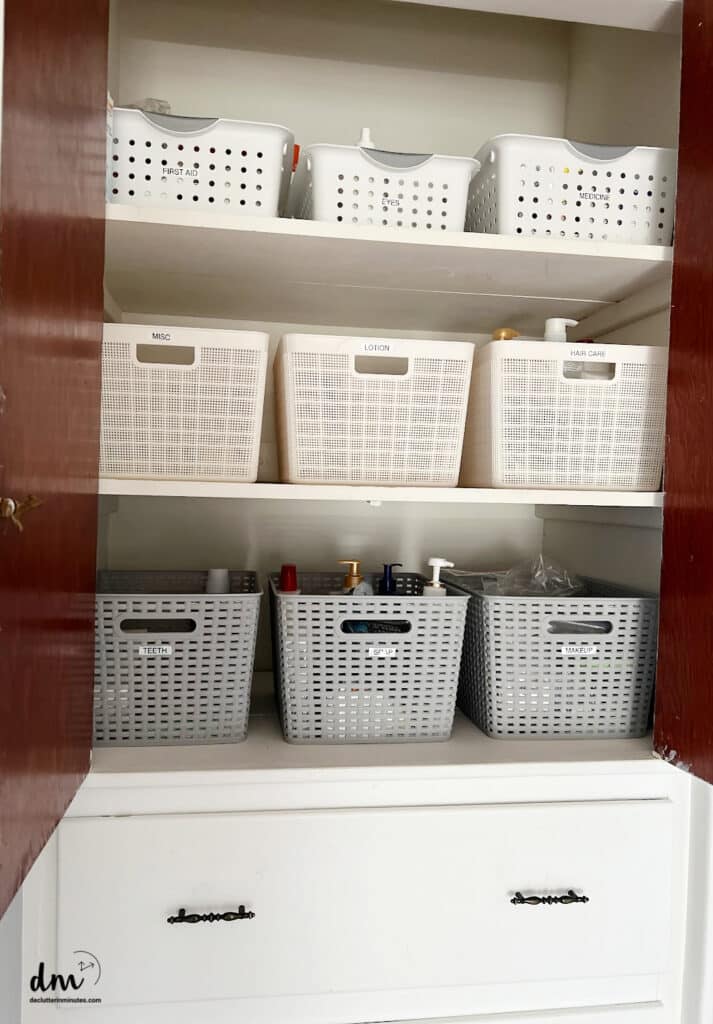
Pick one cluttered spot that has baskets or bins already.
Remove everything and sort what you actually use and want to keep first.
Then place only those items back. Wait a day or two before buying anything new. You may already have everything you need.
Tip #4 Stop Keeping Everything Just in Case
This one can sound wise and even responsible, which is exactly why so many of us fall for it.
The Old Advice
Keep it just in case you need it someday.
Maybe it is an extra lamp, or those three sets of serving bowls. It might be duplicate tools, or a drawer full of cords that could match something.
And yes, it does feel practical in the moment.
Why It Backfires
The problem is that “just in case” can quietly take over your entire home.
One extra item becomes five. One backup turns into a shelf full of backups. Before long, valuable space is being used to store things for situations that may never happen.
I did this for years with extension cords, kitchen gadgets, and random extras we had collected along the way.
At one point, I think we had enough cords to wire half the neighborhood.
The Flip That Worked
What helped me most was learning the difference between prepared and overcrowded.
Keeping a reasonable amount can be smart.
Keeping everything usually creates stress, not security.
Now I focus on what fits my current home, current space, and current life.
Action Step
Choose one just in case category today.
Try cords, tote bags, extra towels, serving pieces, or kitchen gadgets.
Keep the best and most useful amount that comfortably fits the space you have, then let the extras go.
12PC Data Cable Organizer, 2026 Upgrade Silicone Cable Ties Reusable Cable Management Organizers, Multipurpose Elastic Cord Organizer for Fastening and Bundling Cable Cords Wires (12PC)4 pcs Clear Zipper Pouches,Hard Shell Zipper Case, Toiletry Bag for Travel, CLear Diaper Bag, Toiletry Pouch, Travel Organizer, Cosmetic Bag,Toy Storage Bins (M+3S)Cable Ties 180PCS, 4+6+8+10 inch Reusable Multi-Colour Cable Ties Wire Ties Cord Organizer Cable Organizer Adjustable Cable Management for Cable Management (4+6+8+10 Inch(Colorful))


Tip #5 Stop Saving Things for the Kids
This one comes from a loving place, which is why it can be so hard to question.
The Old Advice
Keep it because the kids might want it someday.
It may be dishes, furniture, holiday items, books, tools, or boxes of things you have carefully saved for years.
Many of us tell ourselves we are being thoughtful by holding onto it.
Why It Backfires
Often, we end up storing things for other people without ever knowing if they truly want them.
I learned this when we were getting ready to move into our empty nester home. I thought it was the perfect time to pass treasured items on to my boys.
So I started asking if they wanted the things I had so carefully saved for them, and the overwhelming answer almost every time was no.
That was a real eye-opener for me.
I had spent years holding onto boxes of things for my kids that my kids did not actually want.
The Flip That Worked
What helped me most was realizing the kindest gift is not always more stuff.
Sometimes the real gift is handling these decisions ourselves while we can.
Keeping a few meaningful things is one thing.
Storing years of unasked-for items is something else entirely.
Action Step
Choose one tote, one shelf, or one box you have been saving for family.
Take photos of a few meaningful items and ask if anyone would truly like them.
If the answer is no, give yourself permission to let them go and lighten what you are carrying now.

What These Flipped Decluttering Tips Really Taught Me
After trying all kinds of decluttering advice over the years, I realized something important.
It was never that I needed more rules, more bins, or even more willpower.
I simply needed an approach that fit the life I am living now.
That shift changed everything.
Instead of asking what should leave, I started asking what deserves space in my home today.
Instead of pulling everything out and creating a bigger mess, I learned to work in small sections I could actually finish in one go.
Instead of buying organizers first, I learned to wait until I knew what was actually staying.
Instead of keeping things just in case, I focused on keeping a reasonable amount that fit my lifestyle today.
And instead of storing boxes for someday, I began making decisions now that were kind and loving for my family.
That is really what right-sizing means.
It is not about having less for the sake of less, being minimalistic, or following rules that feel stifling.
It is about having the right amount for your home so you have a space that feels comfortable, peaceful, and a joy to be in.
And when you begin looking at your home through that lens, progress feels a whole lot easier.
What to Remember When Nothing Seems to Work
If you have been trying to make progress for years and feel like nothing has truly worked, please know this.
You do not need to force yourself through decluttering methods that no longer fit the life you are living now.
Sometimes the only thing that needs to change is the approach.
Small shifts can create big relief over time. One drawer. One shelf. One better decision repeated again and again.
That is how homes begin to feel lighter, how stress begins to ease, and how confidence comes back.
So if things feel overwhelming today, start smaller than you think you should.
Finish it all the way.
Then let that small win carry you into the next one.
Change can be slow and still be effective. And your home can become easier to manage one simple step at a time.