How to Downsize Your Kitchen When You’re Not Cooking Like You Used To
If you’ve found yourself opening cabinets full of tools you rarely use, you’re not alone. How to downsize your kitchen when you’re not cooking like you used to begins with recognizing that your life has changed, and your home should reflect that reality.
This post is part of our Downsizing 101 approach to right sized living, where your space supports the life you’re living now, not the one you lived years ago. The kitchen is often the last place we think to adjust, but when it fits how you live today, everyday life feels lighter and easier.
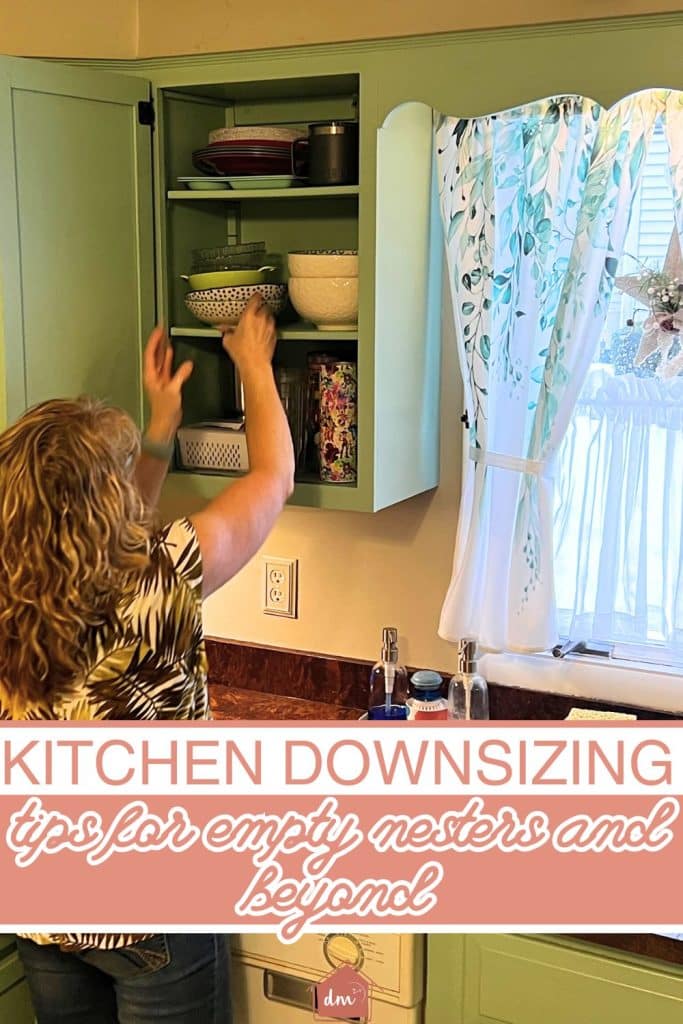
When my kids were younger, our kitchen felt like Grand Central Station. There was always something happening in that room. Homework spread across the table, conversations overlapping, games in progress, bills being paid, and yes, plenty of cooking and eating. It’s funny how one room can wear so many hats when you have a busy family.
Today, things look very different. Our kids are grown and living on their own, and the kitchen is now used for what it was designed for: cooking and eating.
For a long time, I held on to pieces of that earlier season without really thinking about it. A family sized griddle we used on weekends, dishes that could easily feed a dozen people, and enough food storage containers to last for years.
It wasn’t until we moved into our empty nester home that I realized I was still stocking a kitchen for a life I was no longer living.

Right Sized Living for the Life You’re Living Now
Right sized living isn’t about having less just for the sake of it. It’s about having what fits the life you’re actually living now. As we get older, our routines shift, our energy changes, and so do our priorities. But our homes don’t automatically adjust when our lives do.
When that happens, rooms start to feel harder to manage, simply because there is too much stuff. Not because we’ve done anything wrong, but because the space didn’t change with us.
The kitchen is a perfect example. Over time, things start to pile up. New dishes come in and get added to the old ones, and we keep them all just in case. Just in case everyone comes home at once. Just in case we host big holidays. Just in case we start cooking the way we used to. Over time, those just in case items take up space and make daily tasks harder than they need to be.
Right sized living gives you permission to let your home evolve with you. It allows your kitchen, and every other room, support your life today instead of reminding you of how it used to be. And that one simple shift can change how you see your entire home.

Step 1: Get Clear on the Kitchen You Actually Use Today
Before you touch a single cabinet, take a minute to notice how you use your kitchen now, and not how you used to use it.
Ask yourself:
- What meals do I make most often right now
- Where do I actually stand and work when I’m preparing food
- What do I reach for every day
- What do I only use once or twice a year
- What do I keep out of habit, not because it helps me
This step matters because kitchen clutter is usually decision clutter. When you don’t have a clear picture of your current routine, it’s easy to keep everything just in case. But once you’re honest about how you cook and eat today, the next steps get so much simpler.
A helpful way to do this is to pick one normal week and pay attention to it. Not in a strict way. Just notice what you use, what you routinely eat, what you wash, and what you never touch. This works for items as well as areas in the kitchen.
By the end of the week, you’ll have a clear, real-life picture of what deserves space in your kitchen now.

Step 2: Start With What No Longer Fits Your Life
Once you’re clear on how you use your kitchen today, the next step is to remove the items that no longer match your life now.
This is not the time to make big emotional decisions or tackle everything at once. Instead, focus on what’s easiest to identify.
Look for things like:
- Cookware you haven’t used in years.
- Appliances that were helpful once but now sit untouched.
- Extra dishes meant for large gatherings you rarely or no longer host.
- Storage containers you keep just in case, but never actually use.
These items usually stand out once you’ve taken the time to notice your current routine. And letting them go can make a big difference right away, giving you the motivation you need to keep going.
Tip: If you find yourself hesitating, remind yourself that this isn’t about getting rid of memories. It’s about making room for the life you’re living now. Just because something made sense years ago doesn’t mean it needs to stay in your kitchen today.
Move slowly, especially when you’re first starting out. Work on one drawer or one cabinet and see how things go. Starting small helps you build confidence in this new approach. Rushing is not the way to go here. Learn to see what you have more clearly and move at a pace that makes sense for you.

Step 3: Give the Most Used Items the Best Space
After removing what no longer fits, it’s time to take a look at what’s left and decide where it belongs.
In a right sized kitchen, the items you use most should be the easiest to reach. That means they’re stored at eye level or within easy arm’s reach, not tucked away in high cabinets or buried behind things you rarely use.
Think about the tools and dishes you reach for every day. Your favorite pan. The plates you use for most meals. The items that come out again and again. These are the things that deserve the best space in your kitchen.
Items you use occasionally can be stored a little farther away. And things you only use once or twice a year don’t need prime real estate. When everything is stored based on how often you use it, cooking and cleanup take less effort, and the kitchen starts to feel calmer.
Remember, this step isn’t about creating a perfect system. It’s about making small adjustments that support your daily routine so you enjoy being in this space.
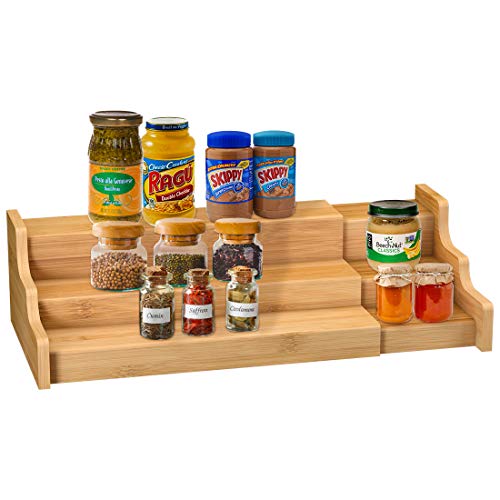
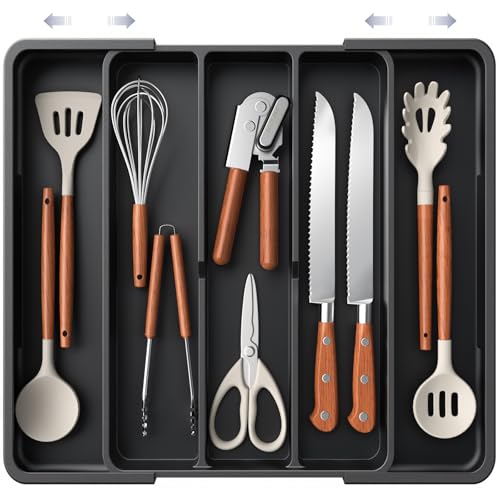
SONGMICS Cabinet Organizer Shelf, Set of 2 Kitchen Counter Shelves, Kitchen Storage, Spice Rack, Stackable, Expandable, Metal and Engineered Wood, Ink Black and Natural Beige UKCS02NB Spice Rack Kitchen Cabinet Organizer- 3 Tier Bamboo Expandable Display Shelf YellowPull out Cabinet Organizer, 2-pack, Expandable(12Aujen Silverware Organizer – Expandable Kitchen Drawer Organizer, Adjustable Utensil Organizer, Cutlery Tray for Forks, Knives, Multipurpose Kitchen Organizers and Storage Solution, Black, X-LargeHusfunov Acrylic Spice Drawer Organizer, 4 Tier- 4 Pack Clear Spice Rack Tray for Drawer/Countertop, Expandable From 11” to 22” Kitchen Seasoning Organizers(Jars Not Included)BALEINE China Storage Containers, Sturdy Quilted Wine Glass Storage, Plate Organizer with Carry Handles, Moving Boxes for Dishes, Cups, Mugs and Stemware (Plate Mug Combo, Soft Shell Grey)




Step 4: Be Honest About What You Want to Take Care Of
A kitchen that works well isn’t just about how it looks when you’re done downsizing. It’s about how it feels to live with it day after day.
As you look at what’s left in your kitchen, ask yourself a simple question: do I really want to take care of this? That might mean washing it by hand, finding space to store it, or dealing with it when it’s in the way.
If something feels like extra work every time you use it, that’s important to notice. Even useful items can become frustrating when they require more effort than you want to give in this stage of life.
Right sized living isn’t about keeping what you think you should have. It’s about keeping what fits your daily routines, your habits, and how much upkeep you want right now.
When you’re honest about what you want to take care of, your kitchen stays easier to manage. There’s less buildup, fewer piles, and fewer small decisions to deal with each day. And that makes the space more enjoyable to use.
Step 5: Create a Simple Reset That Works for You
The goal of downsizing your kitchen isn’t to keep it perfect. It’s to keep it working.
Instead of trying to stay on top of everything all the time, think in terms of a simple reset. A reset is a short, regular habit that helps your kitchen stay aligned with how you live, without turning into a project.
This might look like:
- A quick check of your drawers every few months.
- Clearing out containers or duplicates when they start to multiply.
- Cleaning out counter space when things begin to creep back.
The key is keeping it light, like another part of your home care routine. You’re not turning this into a big chore. You’re just making small adjustments as life continues to change.
Right-sized living is a lifestyle, not a once and done project. And when you build downsizing into your weekly routine, your kitchen can keep supporting you without needing another big overhaul.
Downsizing your kitchen isn’t really about cabinets or even your cookware. It’s about creating a space that supports the life you’re living right now.
When your kitchen fits your routines, your energy, and how you actually use it, everyday tasks feel easier. Cooking, cleaning, and even just moving through the space takes less effort. And that ease carries into the rest of your home.
This kind of change doesn’t require perfection or big decisions all at once. It happens through small choices, made one at a time, at a pace that works for you. Each step helps your home better support the life you’re living today.
Kitchen Downsizing FAQs
If your kitchen feels harder to manage than it should, spending time searching for things you need, or you’re surrounded by things you rarely use, that’s usually a sign. Downsizing isn’t about timing it perfectly. It’s about noticing when your space no longer fits how you live.
You don’t have to downsize to the point of inconvenience. Right-sized living means keeping what supports your life, including the occasional gathering. You can invest in storage containers made for dishes, cookware, or serving dishes.
No. In fact, going slowly often works better. Starting with one drawer or cabinet helps you build confidence and make clearer decisions as you go.
That concern is very common and a real one. Most people find that once the kitchen feels easier to use, they don’t miss the extras. And if you ever truly need something again, you can find a solution then. Remember, you don’t need to plan for every possible future.